🍄 東京キノコ図鑑Tokyo Mushroom Field Guide

散歩で出会ったキノコの写真図鑑 ・ 全36種A photo field guide to mushrooms met on walks · 36 specimens

絞り込み:Filter:
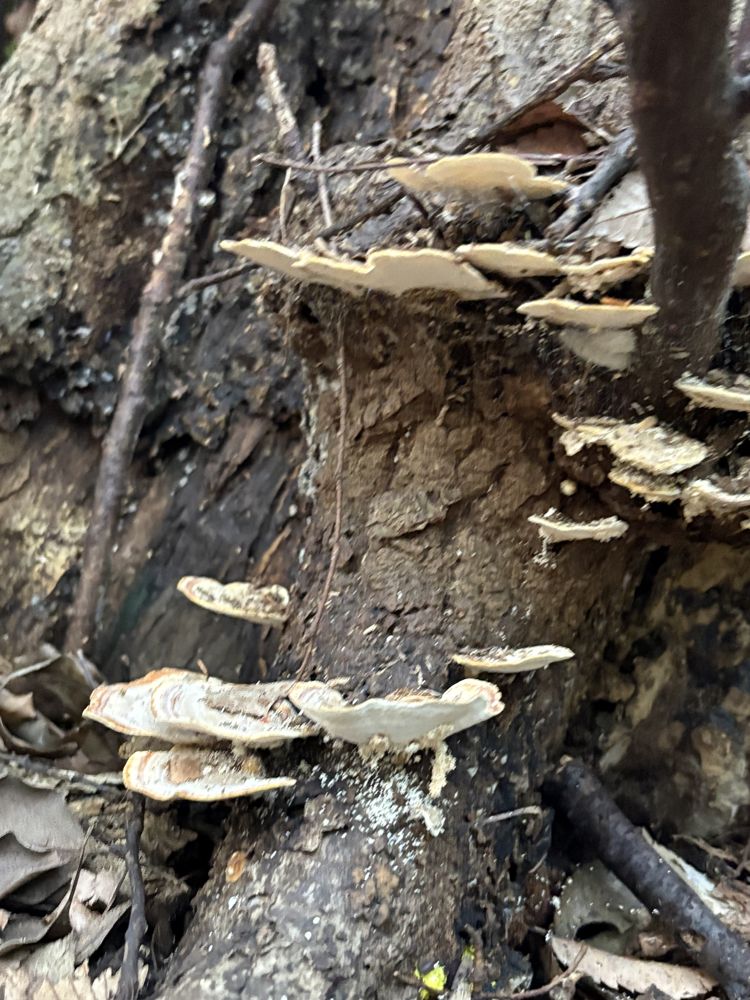
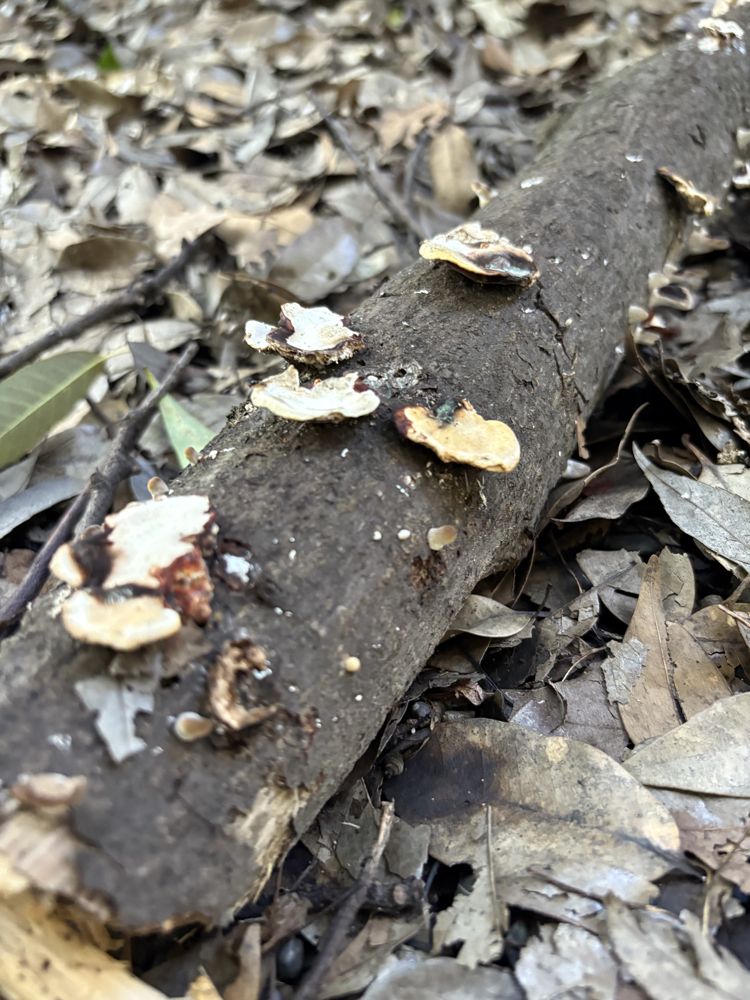
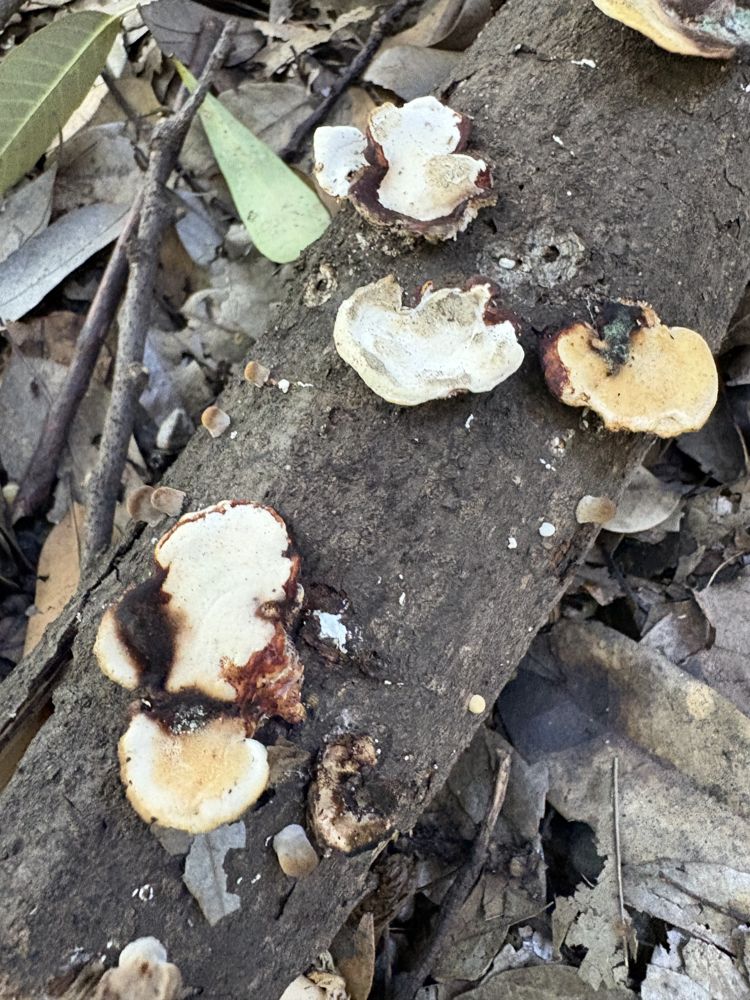
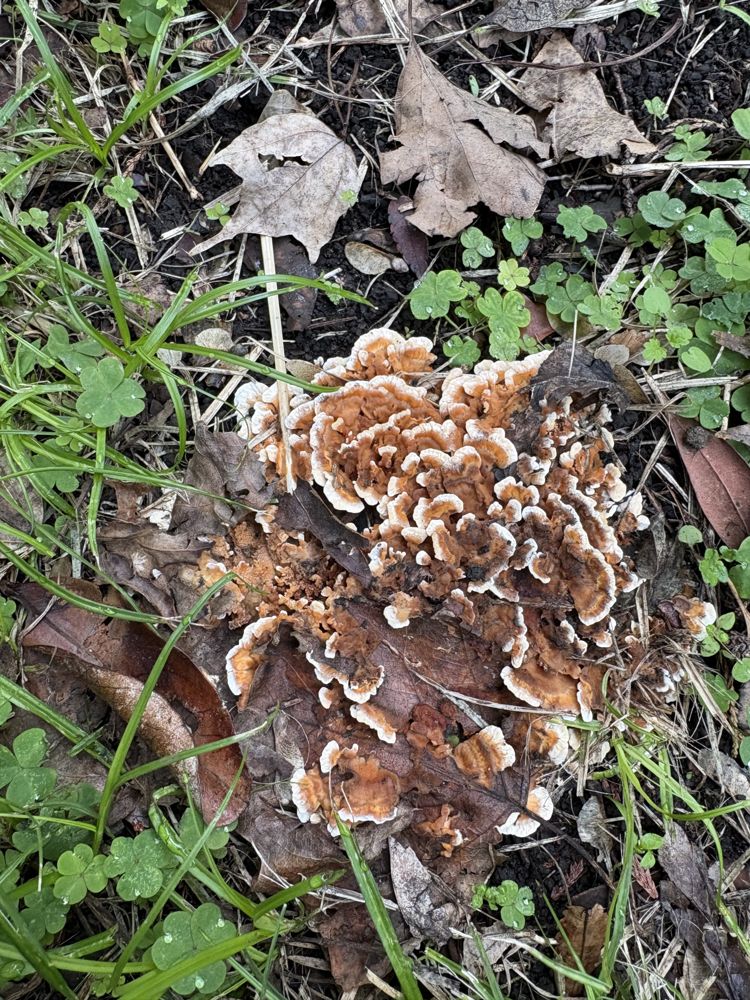
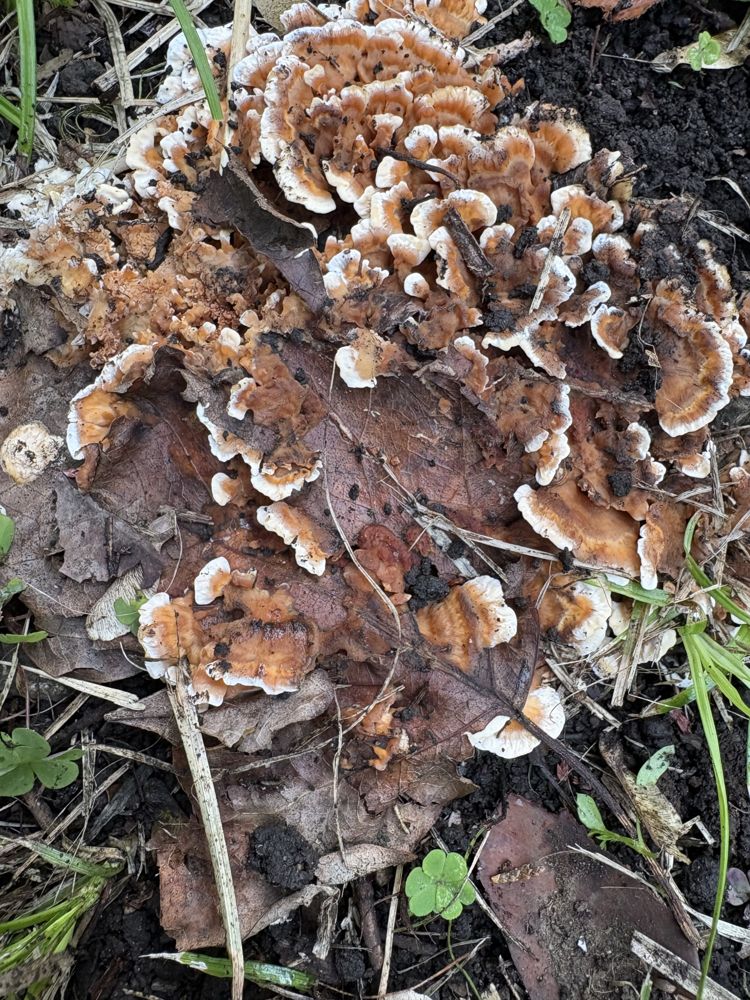
シワタケ属の一種(シワタケ類)📷 2枚2 photos
シワタケ属の一種(シワタケ類)シワタケ属の一種(シワタケ類)
★★★☆☆

シワタケ属の一種(シワタケ類)Phlebia sp. (wrinkled crust group)

Phlebia sp. (cf. tremellosa)
食毒不明Edibility unknown確度 中Confidence: Moderate

落ち葉の間に、白い綿毛状の縁をもつ橙色の小さな傘が重なってロゼット状に広がる。橙色の面に網目状のしわがあり、落ち葉や小枝を巻き込んで埋もれ材から出ている様子。子実層が平滑なキウロコタケ類、針のあるコウタケ類とは異なり、シワタケ類と推定。種は断定しない。Small orange caps with white cottony margins overlap in a rosette among fallen leaves. The orange surface has net-like wrinkles, and the colony engulfs leaves and twigs, apparently from buried wood. Unlike Stereum (smooth) or Hydnellum (spines), it suggests a Phlebia species; species not confirmed.

🔍 確認ポイント: 傘上面が白い綿毛状か、子実層のしわ・質感(ゼラチン質か革質か)、基物の材。次回は縁をめくって裏面・断面と、付いている材を撮影。To confirm: Whether the upper side is white and woolly, wrinkle texture, the substrate wood. Next time shoot the underside, a cross-section and the wood it grows on.
📅 2026-11-13 📍 東京都世田谷区Setagaya, Tokyo
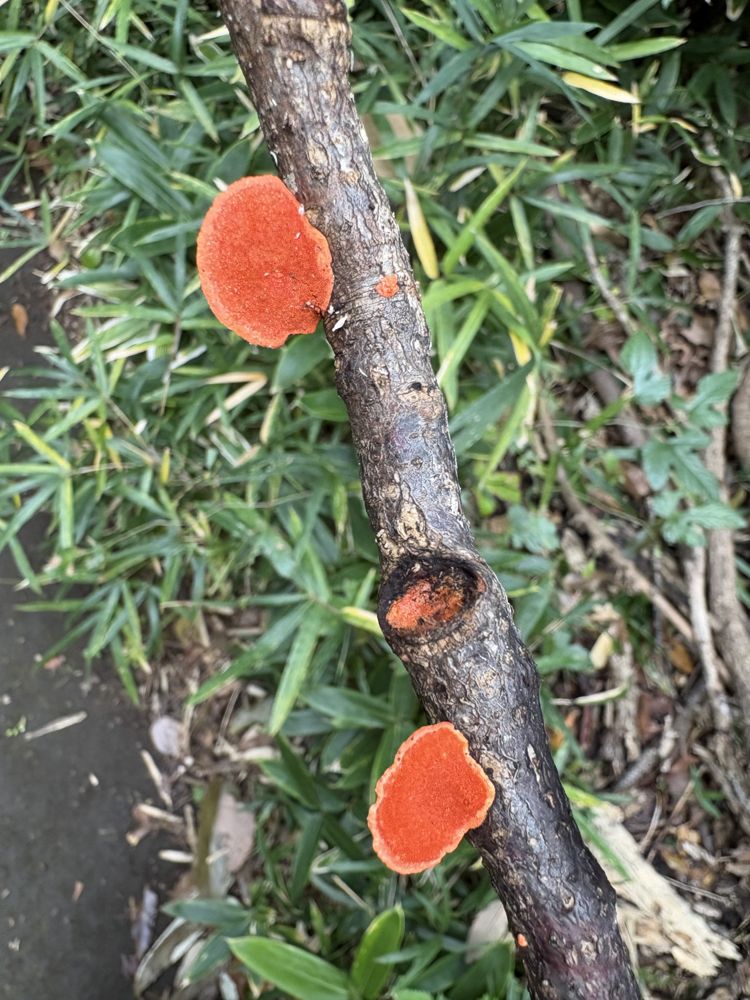
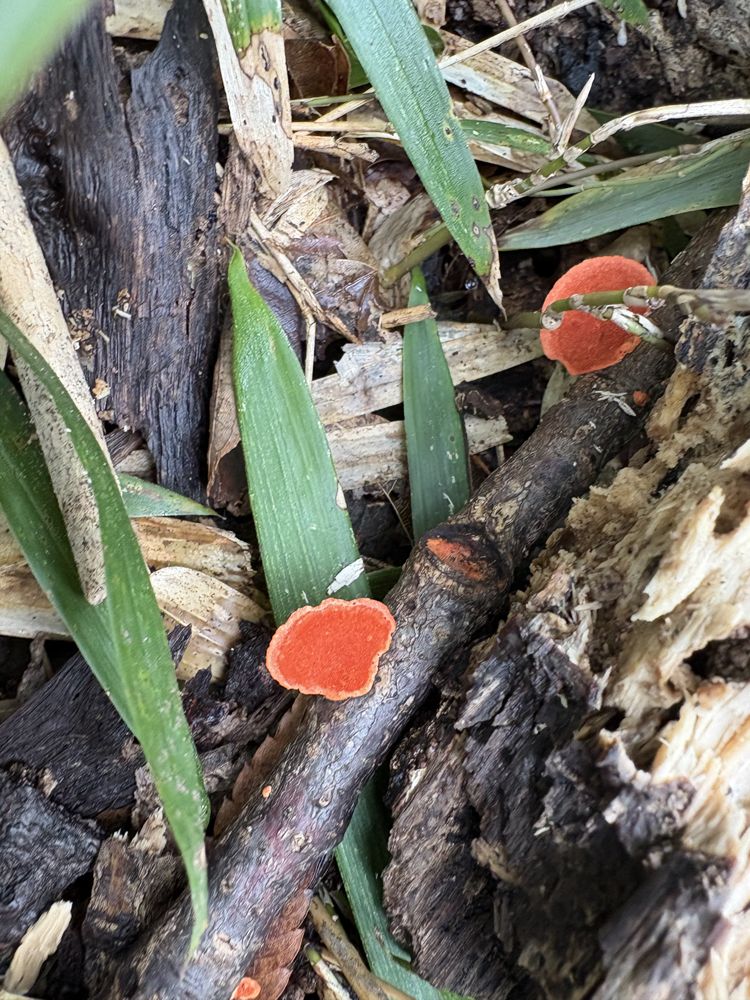
ヒイロタケ(シュタケ属)📷 3枚3 photos
ヒイロタケ(シュタケ属)ヒイロタケ(シュタケ属)ヒイロタケ(シュタケ属)
★★☆☆☆

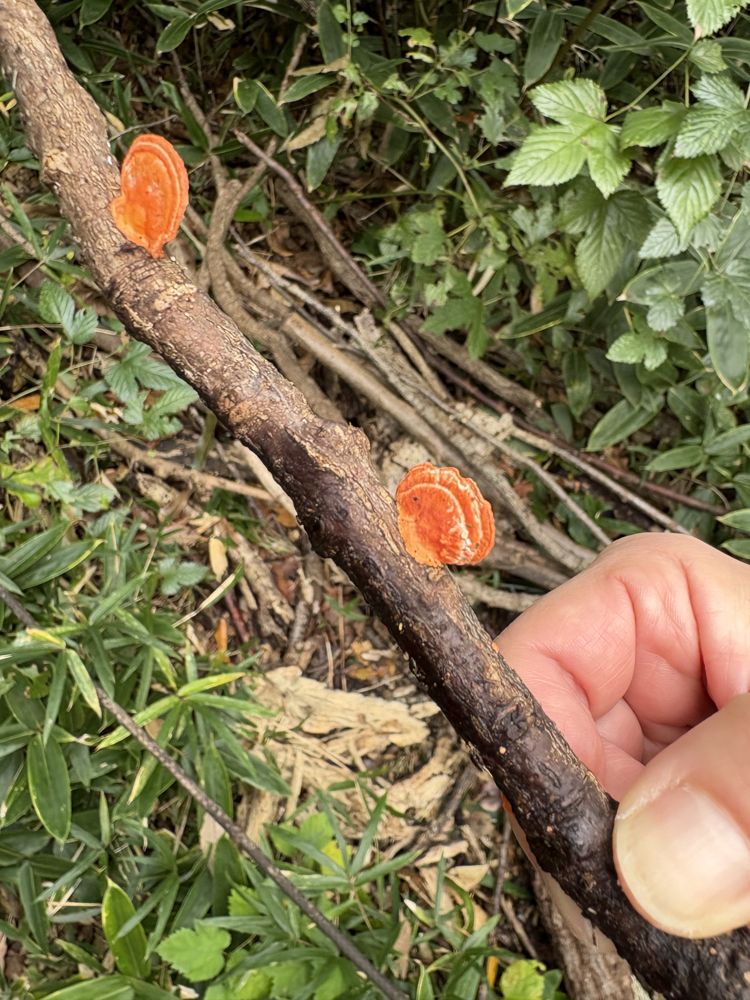
ヒイロタケ(シュタケ属)Cinnabar bracket (Pycnoporus)

Pycnoporus cf. coccineus
不食Inedible確度 中〜高Confidence: Moderate–High

落ちた広葉樹の枯れ枝に、朱橙色の薄い半円形の傘が2個つく。下面は細かい孔がびっしり並ぶ。傘が厚く模様の弱いシュタケより、暖地の低地に多いヒイロタケと推定。木質で食用にならない。Two thin, semicircular cinnabar-orange caps on a fallen hardwood twig, with very fine pores below. Thinner and more zoned than P. cinnabarinus, so likely P. coccineus, common in warm lowlands. Woody and inedible.

🔍 確認ポイント: 傘の厚み(数mmならヒイロタケ)と孔の細かさ。次回は真横から厚みが分かるカットと、孔の接写を。To confirm: Cap thickness (a few mm suggests P. coccineus) and pore size. Next time add a side view and a pore close-up.

📅 2026-11-13 📍 東京都世田谷区Setagaya, Tokyo
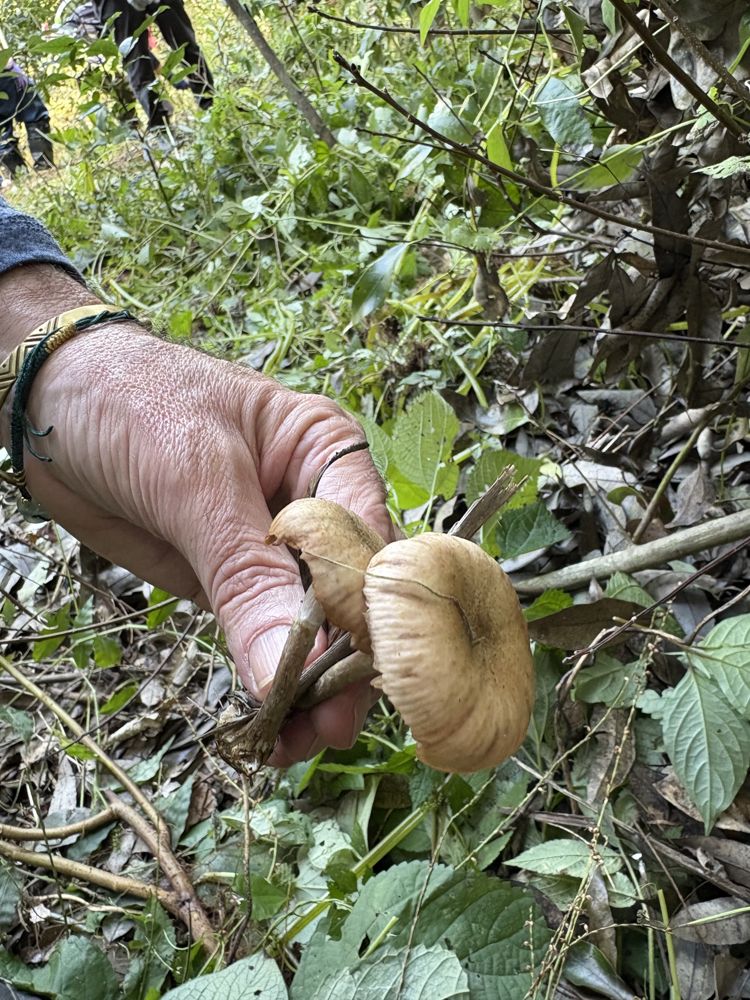
ハラタケ目の一種(黄土色の傘・属不明)
★★☆☆☆

ハラタケ目の一種(黄土色の傘・属不明)An agaric (ochre cap, genus uncertain)

(写真のみでは同定困難)
食毒不明Edibility unknown確度 低Confidence: Low

広葉樹林の林床(落葉・草地の縁)で採取された2本。傘は径4〜6cm程度のまんじゅう〜平開形で黄土色〜淡褐色、表面は乾いて平滑、縁部に放射状の細かいしわ・条線がある。柄は細長く褐色で繊維状、基部に土・落葉が付着。ツバ・ツボは写真では確認できず、ヒダが写っていないため科・属の絞り込みは困難。Two specimens picked from broadleaf forest litter. Cap ~4–6 cm, convex to flat, ochre to pale brown, dry and smooth with fine radial wrinkles at the margin. Stem slender, brown, fibrous. No ring or volva visible and gills are not shown, so family/genus cannot be narrowed.

🔍 確認ポイント: ヒダの色・付き方・密度と胞子紋の色(白/褐色/さび色)が最重要。柄のツバの有無、基部の膨らみや菌糸束、肉の色と変色、においを確認。地上生か埋もれ材上かも確認。To confirm: Gill color/attachment and spore-print color are key. Check for a ring, stem-base swelling or rhizomorphs, flesh color change and odor, and whether it grows on soil or buried wood.

📅 2026-10-17 📍 東京都八王子市Hachioji, Tokyo
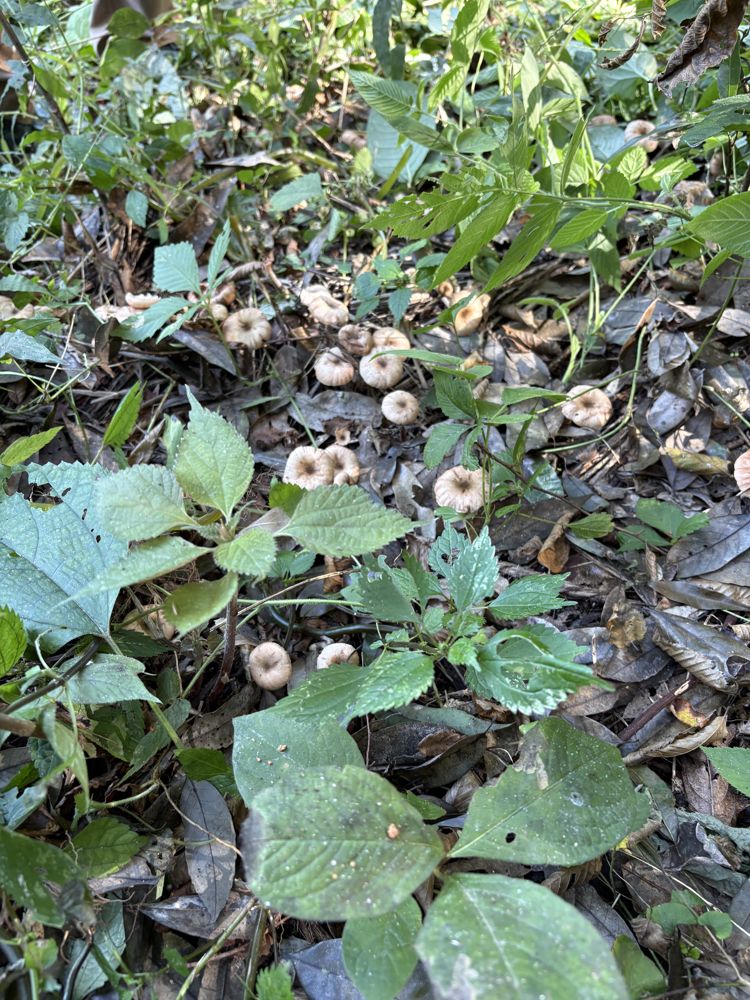
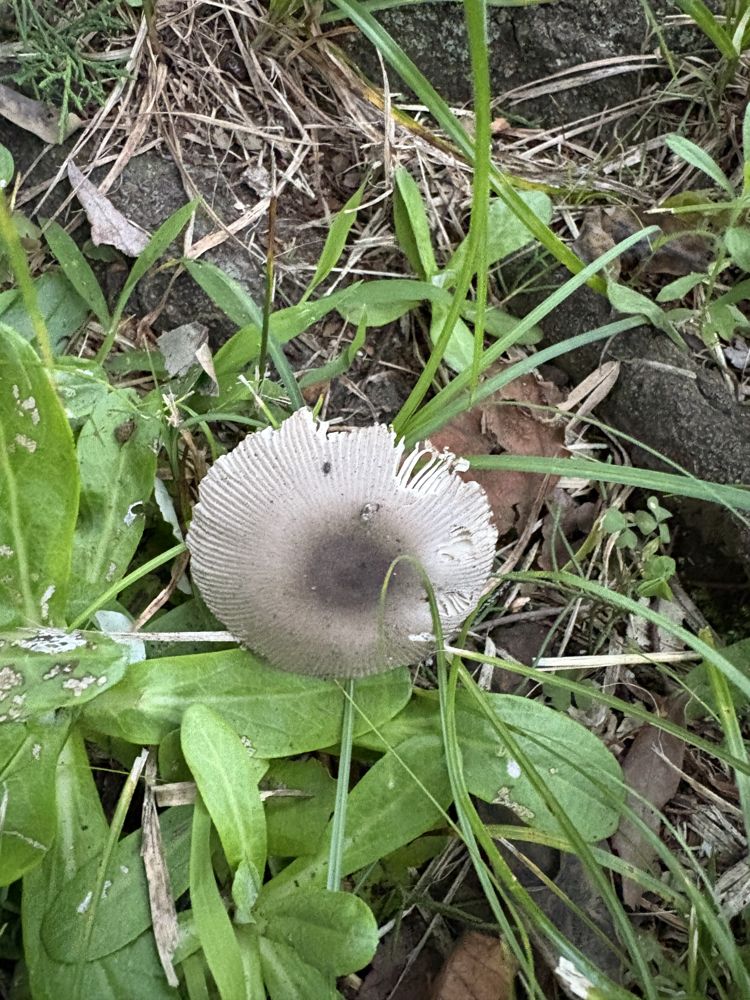
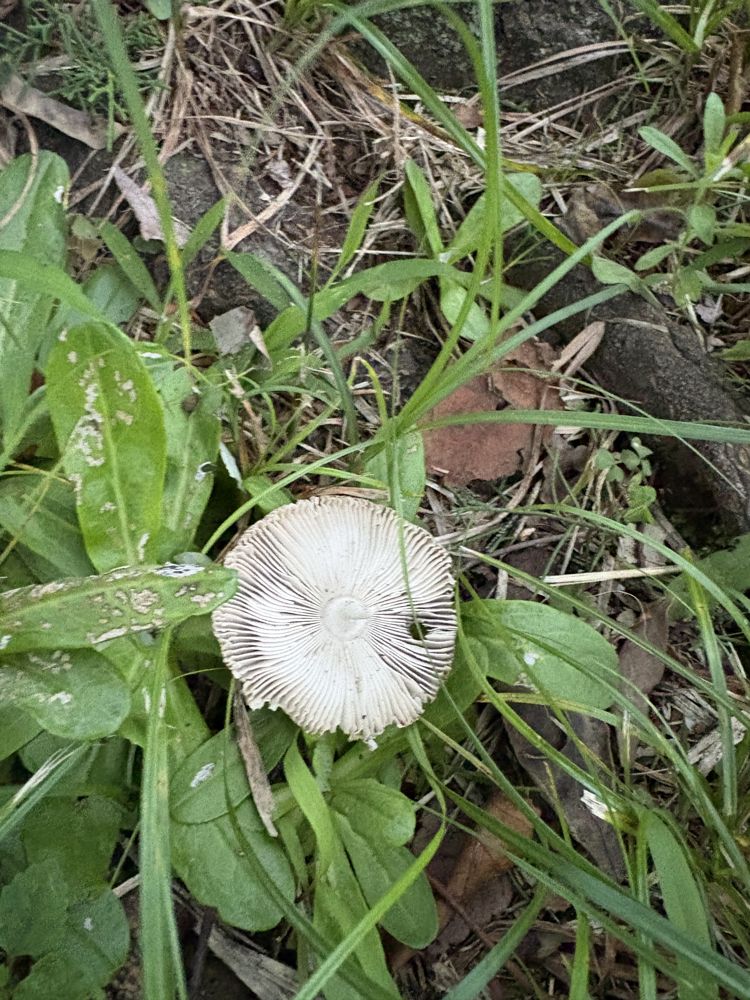
カヤタケ属の可能性(中央が窪む灰褐色の小型菌)
★★☆☆☆

カヤタケ属の可能性(中央が窪む灰褐色の小型菌)Possibly Clitocybe (small grey-brown funnel caps)

cf. Clitocybe sp.
食毒不明Edibility unknown確度 低Confidence: Low

広葉樹の落葉の上に多数が群生。傘は径2〜4cmで灰白色〜淡灰褐色、中央が暗色でへそ状〜漏斗状に窪み、縁は波打って放射状の溝・しわがある。落葉分解性の小〜中型菌。中央の窪みと落葉上の群生からカヤタケ属(Clitocybe s.l.)などが候補だが、ヒダが見えず属の断定はできない。Many fruiting in broadleaf litter. Caps 2–4 cm, greyish-white to pale grey-brown with a dark, navel-like to funnel-shaped center and a wavy, radially grooved margin. Clitocybe s.l. is a candidate, but gills are not visible so the genus is not confirmed.

🔍 確認ポイント: ヒダが垂生(柄に沿って下がる)か、密度と色。胞子紋が白〜クリーム色か。においの有無(粉臭・アニス臭など)。柄の質感(軟骨質か繊維質か)でモリノカレバタケ属などとの区別。※カヤタケ属には有毒種(ムスカリン類)が多い。To confirm: Whether gills are decurrent, their spacing and color; spore print white/cream; odor; stem texture (cartilaginous vs fibrous) to separate from Gymnopus etc. Many Clitocybe are toxic (muscarine).

📅 2026-10-17 📍 東京都八王子市Hachioji, Tokyo
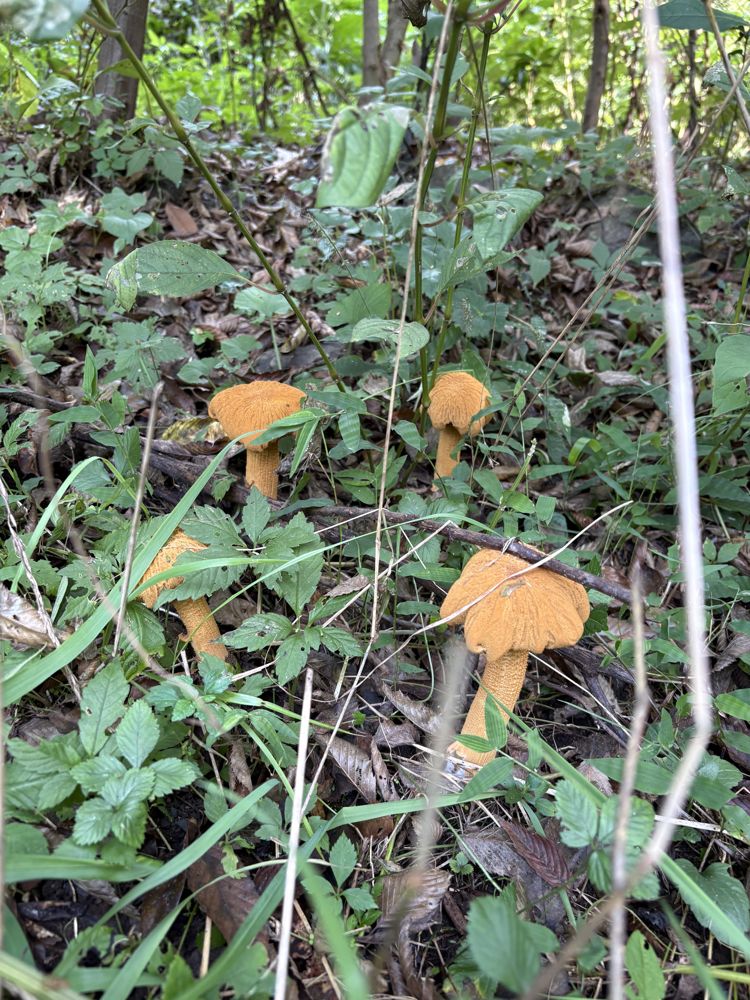
コガネタケ📷 2枚2 photos
コガネタケコガネタケ
★★★☆☆

コガネタケGolden bootleg

Phaeolepiota aurea
食毒不明Edibility unknown確度 中〜高Confidence: Moderate–High

林縁の草地・落葉の混じる地上に数本が散生〜群生。傘は径6〜10cm程度のまんじゅう形〜平開形で縁が波打ち、傘・柄とも黄金色〜橙黄土色の粉状・粒状の被膜にびっしり覆われる。柄は太く、粒状の外被がツバ付近まで鞘状に包む。全体が黄金色の粉にまみれた中〜大型菌という特徴から、コガネタケと推定。食用とする図鑑もあるが胃腸系の中毒例が報告されており、本図鑑では食毒不明扱いとする。Several fruiting on the ground at a forest edge. Cap ~6–10 cm, convex to flat with a wavy margin; cap and stem entirely covered in a golden to orange-ochre powdery-granular coating that sheathes the stout stem up to the ring zone. Estimated as Phaeolepiota aurea. Some guides list it as edible, but gastrointestinal poisonings are reported, so it is treated as edibility unknown here.

🔍 確認ポイント: 柄上部の膜質で大きなツバ(上向きに開く)の有無、ヒダの色(淡黄色→黄褐色)、胞子紋が黄土褐色であること。粉状被膜が指につくか。ツチカブリ類やシロコナカブリ(Cystoderma)類など粒状被膜をもつ菌との大きさ・ツバの比較。To confirm: Look for a large membranous flaring ring on the upper stem, gill color (pale yellow → ochre-brown) and an ochre-brown spore print. Compare size and ring with Cystoderma and other granular-veiled species.

📅 2026-10-17 📍 東京都八王子市Hachioji, Tokyo
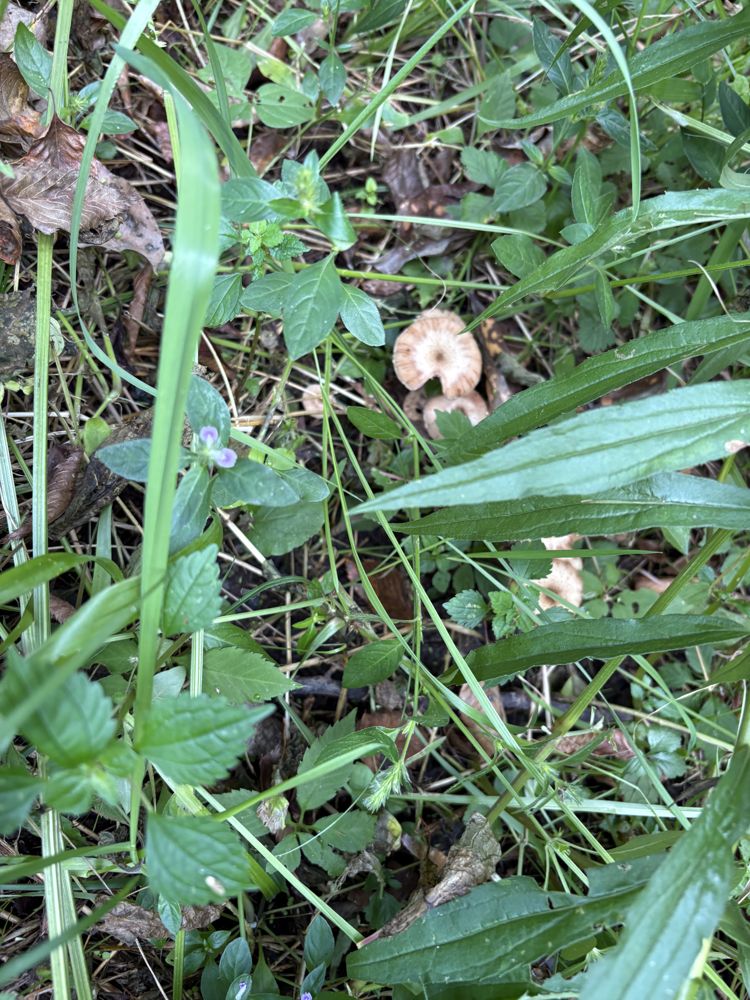
ハラタケ目の一種(淡紅褐色の小型菌)
★★☆☆☆

ハラタケ目の一種(淡紅褐色の小型菌)An agaric (small pinkish-buff caps)

(写真のみでは同定困難)
食毒不明Edibility unknown確度 低Confidence: Low

草地の地上に2〜3本が近接して発生。傘は径2〜3cmの平開形で中央がわずかに窪み、中心部は白っぽく、周縁部は淡紅褐色〜肉色で放射状の条線(またはヒダの透け)が目立つ。写真がややピンボケでヒダ・柄の特徴は確認できない。キツネタケ属やカヤタケ類、チチタケ類の小型種などが候補だが断定不可。Two or three close together on grassy ground. Caps 2–3 cm, flat with a slight central depression, whitish in the center and pinkish-buff toward the margin with conspicuous radial lines. The photo is slightly out of focus; Laccaria, Clitocybe or small Lactarius are possible, but nothing can be confirmed.

🔍 確認ポイント: ヒダの色・厚さ・間隔(キツネタケ属は厚くまばらで淡紅色)、傷つけた時の乳液の有無(チチタケ属の確認)、柄の質感、胞子紋の色(白か)。To confirm: Gill color, thickness and spacing (Laccaria: thick, distant, pinkish); any latex when cut (Lactarius); stem texture; spore-print color.

📅 2026-10-17 📍 東京都八王子市Hachioji, Tokyo
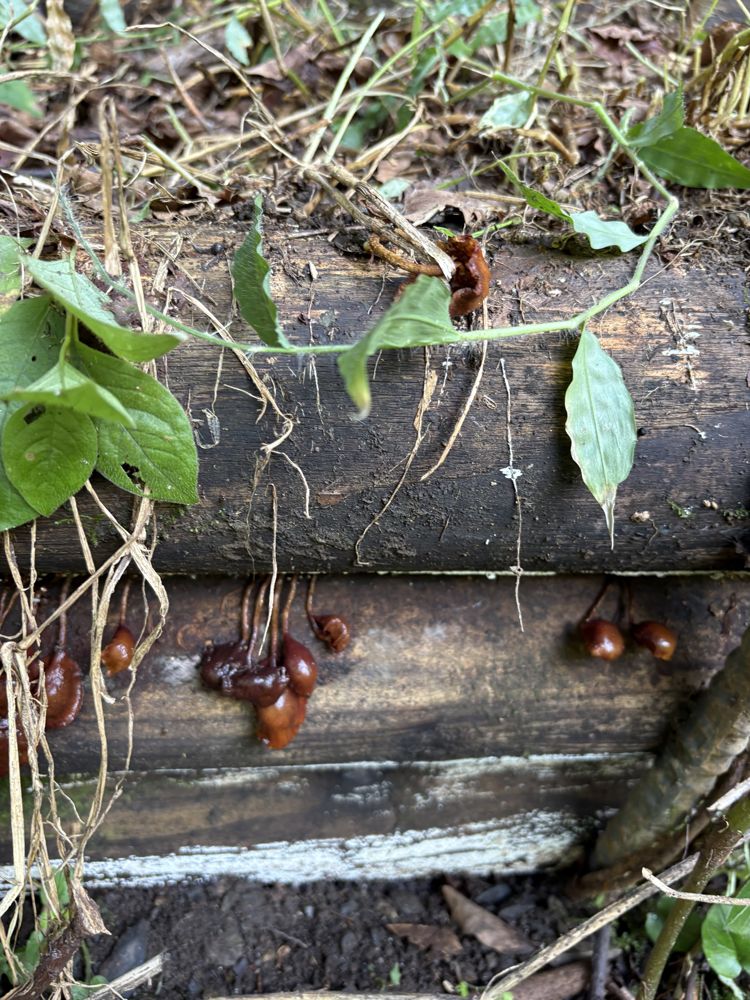
同定困難(材から垂れ下がるゼラチン状の赤褐色菌)
★★★☆☆

同定困難(材から垂れ下がるゼラチン状の赤褐色菌)Unidentified (gelatinous red-brown fungus hanging from timber)

(写真のみでは同定困難)
食毒不明Edibility unknown確度 低Confidence: Low

遊歩道の土留め丸太(腐朽材)の隙間から、細い褐色の柄状部が垂れ下がり、その先に光沢のある赤褐色〜栗色のゼラチン質・塊状の頭部が付く。複数がまとまって発生し、上段の丸太上にも同様の赤褐色の塊が見られる。小型きのこが雨で軟化・崩壊した状態か、ゼラチン質の子嚢菌類・キクラゲ類などの可能性もあるが、写真のみでは分類群の推定も難しい。From the gap between log retaining-wall timbers, slender brown stalk-like parts hang down, each ending in a glossy red-brown gelatinous lump. Similar lumps sit on the upper log. Could be small mushrooms softened/collapsed by rain, or a gelatinous ascomycete or jelly fungus; even the group cannot be estimated from the photo.

🔍 確認ポイント: 頭部を触ってゼラチン質か肉質か、裏面にヒダがあるか(崩れた傘か)を確認。柄の表面の質感(粒状・毛状)、基部が材に直接付くか菌糸束か。数日後に再訪して新鮮な個体の形を確認するのが確実。To confirm: Touch the heads to see if they are gelatinous or fleshy and whether gills are present underneath (a collapsed cap). Check stalk surface and attachment to the wood. Revisiting for fresh specimens is the surest route.

📅 2026-10-17 📍 東京都八王子市Hachioji, Tokyo
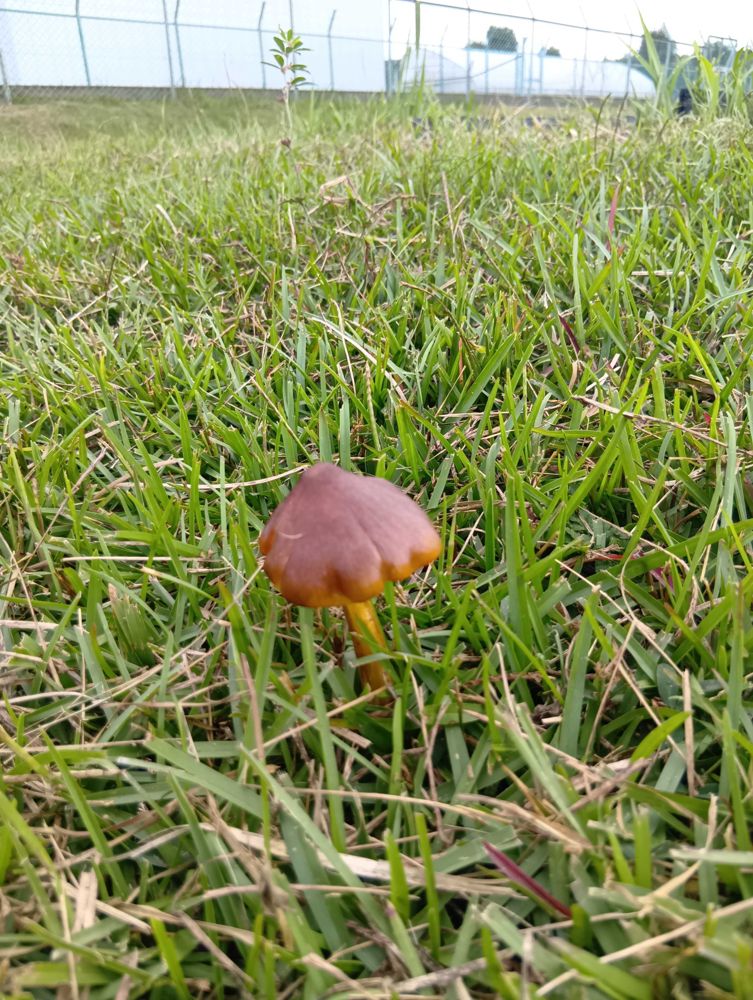
ヌメリガサ科の一種(ヒグロサイブ類)
★★★☆☆

ヌメリガサ科の一種(ヒグロサイブ類)Waxcap family sp. (Hygrocybe-type)

Hygrocybe sp.
食毒不明Edibility unknown確度 低Confidence: Low

フェンス沿いの芝生に単生。傘は鐘形〜饅頭形で縁が波打ち、中央は紫褐色、縁に向かって橙黄色。表面は平滑でやや湿った艶がある。柄は細く橙黄色。ヒダは写真では見えない。色彩と芝生地の生育からヌメリガサ科(ヒグロサイブ類)が候補だが、断定できない。Solitary on a lawn beside a fence. Bell- to bun-shaped cap with wavy margin, purple-brown at the center shading to orange-yellow at the edge, smooth and slightly glossy. Slender orange-yellow stalk. Gills not visible. Colors and lawn habitat suggest a waxcap (Hygrocybe), but it cannot be confirmed.

🔍 確認ポイント: ヒダの付き方と色(蝋質で厚いか)、傘や柄の粘性、傷つけたり古くなったりしたときの黒変の有無、胞子紋の色。To confirm: Gill attachment and color (waxy, thick?), cap/stalk stickiness, blackening on bruising or aging, spore print color.

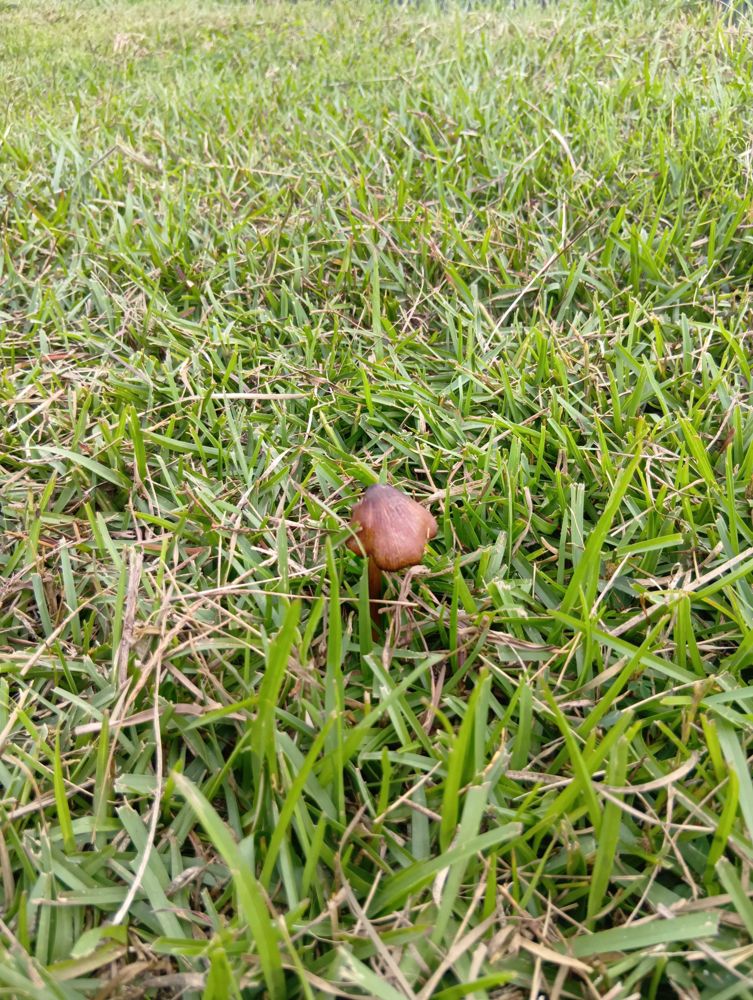
📅 2026-10-06 📍 不明(位置情報なし)Unknown (no location data)
コガサタケ類の一種
★★☆☆☆

コガサタケ類の一種Conocybe-type bonnet sp.

Conocybe sp. cf.
毒Toxic確度 低Confidence: Low

芝生に単生する小型の円錐形〜釣鐘形のきのこ。傘は黄褐色〜茶褐色で放射状の条線があり、頂部が暗色。柄は細長く同色。ヒダ・ツバは見えない。コガサタケ属やヒメヒトヨタケ類などの可能性があり、類縁には猛毒成分を含む種もあるため、毒として扱う。Small solitary conical to bell-shaped mushroom on a lawn. Yellow-brown to brown cap with radial striations and a darker tip; slender stalk of similar color. Gills and ring not visible. Could be Conocybe or a similar genus; some relatives contain deadly toxins, so treated as poisonous.

🔍 確認ポイント: ヒダの色(錆褐色か)、柄のツバの有無、傘が乾いて条線が出るか、胞子紋の色。To confirm: Gill color (rusty brown?), presence of a ring, whether striations show when the cap dries, spore print color.

📅 2026-10-06 📍 不明(位置情報なし)Unknown (no location data)
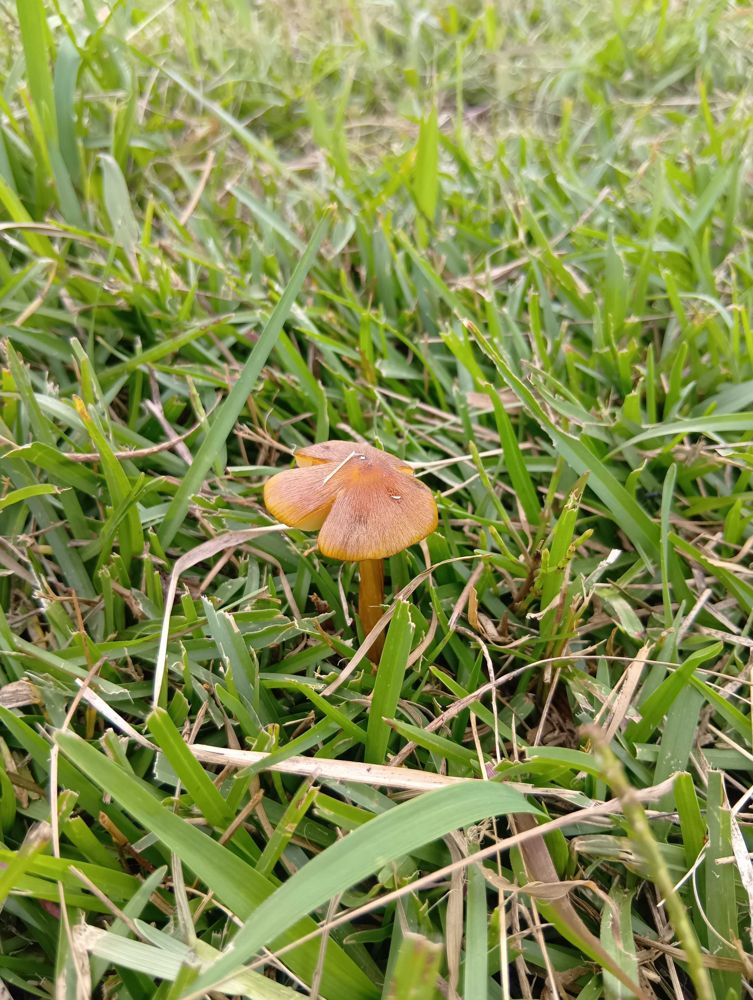
ヌメリガサ科の一種(ヒグロサイブ類)
★★★☆☆

ヌメリガサ科の一種(ヒグロサイブ類)Waxcap family sp. (Hygrocybe-type) (another specimen, same spot)

Hygrocybe sp. cf.
食毒不明Edibility unknown確度 低Confidence: Low

同じ芝生地で見つけた橙黄色〜橙褐色の小型菌。傘は放射状の細かい繊維状模様があり、縁は黄色で波打つ。柄は細く橙黄色。1枚目の個体と同じグループの可能性があるが、傘の繊維状の質感からコガサタケ類やクヌギタケ類の可能性も残る。Small orange-yellow to orange-brown mushroom on the same lawn. Fine radial fibrous pattern on the cap, yellow wavy margin, slender orange-yellow stalk. May belong with the first specimen, but the fibrous texture leaves Conocybe or Mycena-type possibilities open.

🔍 確認ポイント: ヒダの質(蝋質でやや厚い=ヒグロサイブ類)と色、傘表面の粘性、基部の菌糸、胞子紋の色。To confirm: Gill texture (waxy, thick suggests waxcap) and color, cap stickiness, stalk base mycelium, spore print color.

📅 2026-10-06 📍 不明(位置情報なし)Unknown (no location data)
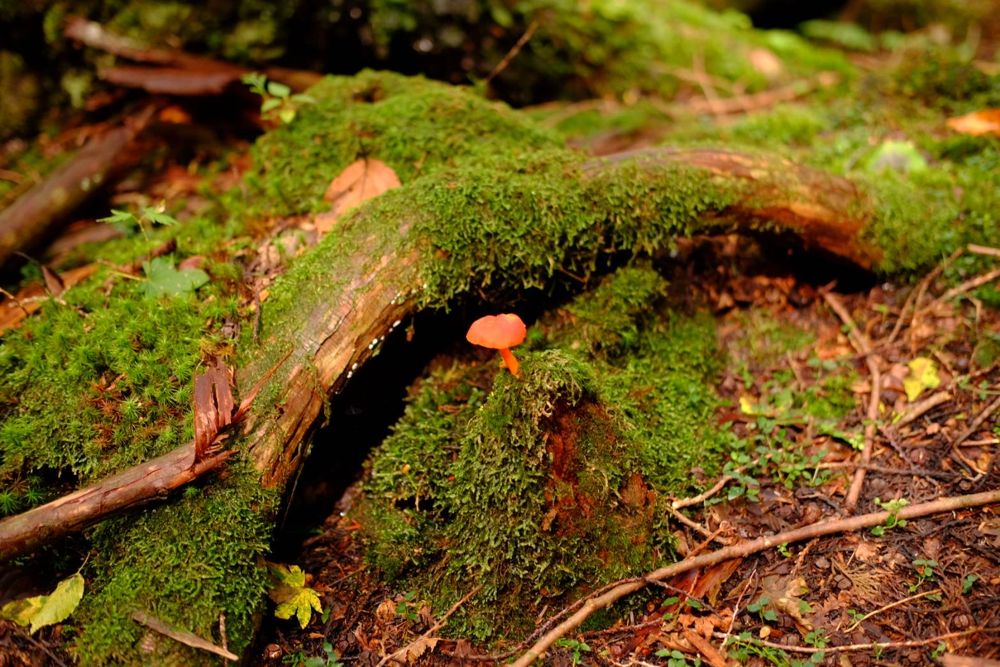
アカヤマタケ属(ヌメリガサ科)
★★★☆☆

アカヤマタケ属(ヌメリガサ科)Waxcap genus (Hygrophoraceae)

Hygrocybe sp.
食毒不明Edibility unknown確度 中Confidence: Moderate

コケむした倒木・根株の上に単生する、非常に小型の鮮やかな緋赤〜橙色のきのこ。傘は径1cm前後で中央がやや窪む釣鐘〜平開形、表面は滑らかで湿時わずかにろう質・光沢がある。柄は細く同色〜やや淡色。周囲は針葉樹林の湿ったコケ地。鮮赤色でろう質感の小型ハラタケ類という特徴から、ヌメリガサ科アカヤマタケ属(Hygrocybe=ワックスキャップ類)と推定。A tiny, vivid scarlet-to-orange mushroom growing singly on a moss-covered fallen log/root. Cap about 1 cm across, smooth, faintly waxy and glossy when moist; stem slender. The bright red color and waxy texture point to the waxcap genus Hygrocybe (Hygrophoraceae). A single red spark amid the green forest moss.

🔍 確認ポイント: ヒダの付き方(垂生〜直生か)とろう質か、傘や柄の粘性の有無、傷つけたときの黒変の有無(アカヤマタケH. conica群は黒変する)。胞子紋が白色であることの確認。基質が土か材/コケかで種を絞る。To confirm: Whether the gills are decurrent/adnate and waxy, presence of any viscidity, whether the flesh blackens when bruised (the H. conica group blackens), and confirming a white spore print. Substrate (soil vs. wood/moss) helps narrow the species.

📅 2026-09-17 📍 不明(EXIF位置情報なし)Unknown (no EXIF location)
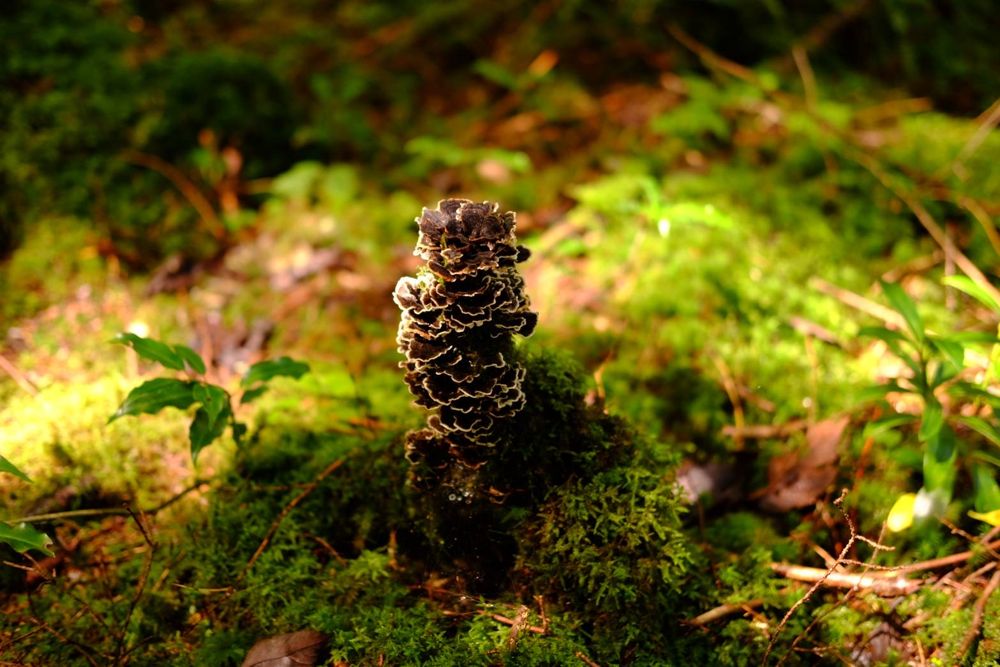
カワラタケ属(タマチョレイタケ科)
★★☆☆☆

カワラタケ属(タマチョレイタケ科)Turkey-tail genus (Polyporaceae)

Trametes cf. versicolor
不食Inedible確度 中Confidence: Moderate

埋もれ材(または根株)から縦に積み重なるように多数の半円形・扇形の薄い革質のカサが重なって塔状のロゼットを形成。表面は黒褐色〜灰褐色で同心円状の環紋が明瞭、縁は淡色〜クリーム色、緑色味は着生藻類による。薄く強靭な革質で環紋をもつ点から、タマチョレイタケ科カワラタケ属(Trametes、カワラタケ Trametes versicolor 類)と推定。Thin, leathery, semicircular to fan-shaped caps stacked vertically from buried wood (or a root), forming a tower-like rosette. Surface blackish- to grayish-brown with clear concentric zones and a pale margin; the greenish tint is epiphytic algae. The thin tough flesh and concentric zonation suggest the genus Trametes (turkey-tail group, Polyporaceae).

🔍 確認ポイント: 傘裏が管孔(多孔菌)であること、孔口の色(白〜淡黄)と1mmあたりの孔数。カサ表面の毛の有無・微毛の質感。ニクウチワタケ属やシハイタケ属など近縁の環紋菌との区別。基質(広葉樹材か)。To confirm: Confirm the underside is a pore surface (a polypore), the pore color (white to pale yellow) and pores per mm, and the texture of any surface hairs. Distinguish from related zoned bracket fungi; check the host wood (broadleaf?).

📅 2026-09-17 📍 不明(EXIF位置情報なし)Unknown (no EXIF location)
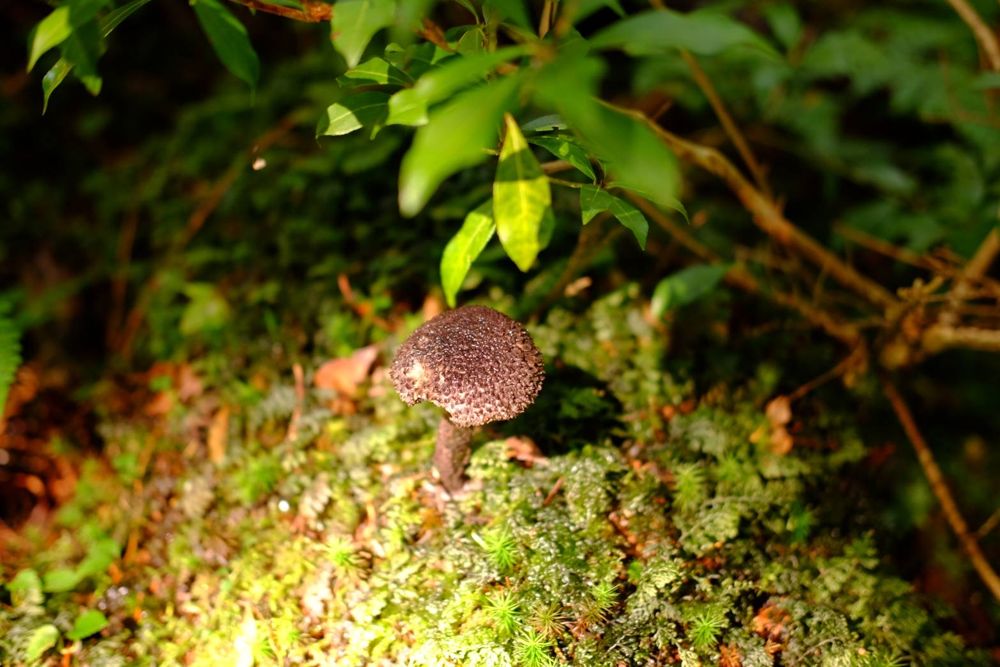
ハラタケ目の一種(属不明・暗紫褐色の微粒状鱗片)
★★★☆☆

ハラタケ目の一種(属不明・暗紫褐色の微粒状鱗片)An agaric (genus uncertain)

(写真のみでは同定困難)
食毒不明Edibility unknown確度 低Confidence: Low

コケの上に単生する有柄のハラタケ型きのこ。傘は径2〜3cmの半球〜まんじゅう形で、暗紫褐色〜赤褐色。表面全体が微細な粒状〜ささくれ状の鱗片に密に覆われ、ざらついた質感。柄も同色で繊維状〜細鱗片状。ツバ・ツボは写真では判然としない。傘表面の顕著な微粒状鱗片という特徴はあるが、写真のみでは科・属の断定が難しい(オキナタケ科Cystodermella類やモエギタケ科Pholiota類、フウセンタケ類などが候補)。A stemmed agaric growing singly on moss. Cap 2–3 cm across, hemispherical to convex, dark purple-brown to reddish-brown, its whole surface densely covered with fine granular-to-scurfy scales giving a rough texture. Stem the same color, fibrillose to finely scaly. The species cannot be pinned down from the photo alone (candidates include Cystodermella, Pholiota, or Cortinarius allies).

🔍 確認ポイント: ヒダの色と付き方、胞子紋の色(褐色系かさび色か白色か)が科の決め手。柄のツバの有無、傘の鱗片が粒状か綿毛状か。基質(土上かコケ/材上か)。KOH反応や生育環境も要確認。現時点では属レベルの断定を避ける。To confirm: Gill color and attachment and spore-print color (brown/rusty/white) are the key to the family. Presence of a ring on the stem, whether the cap scales are granular or woolly, and the substrate (soil vs. moss/wood). Genus is deliberately left undetermined for now.

📅 2026-09-17 📍 不明(EXIF位置情報なし)Unknown (no EXIF location)
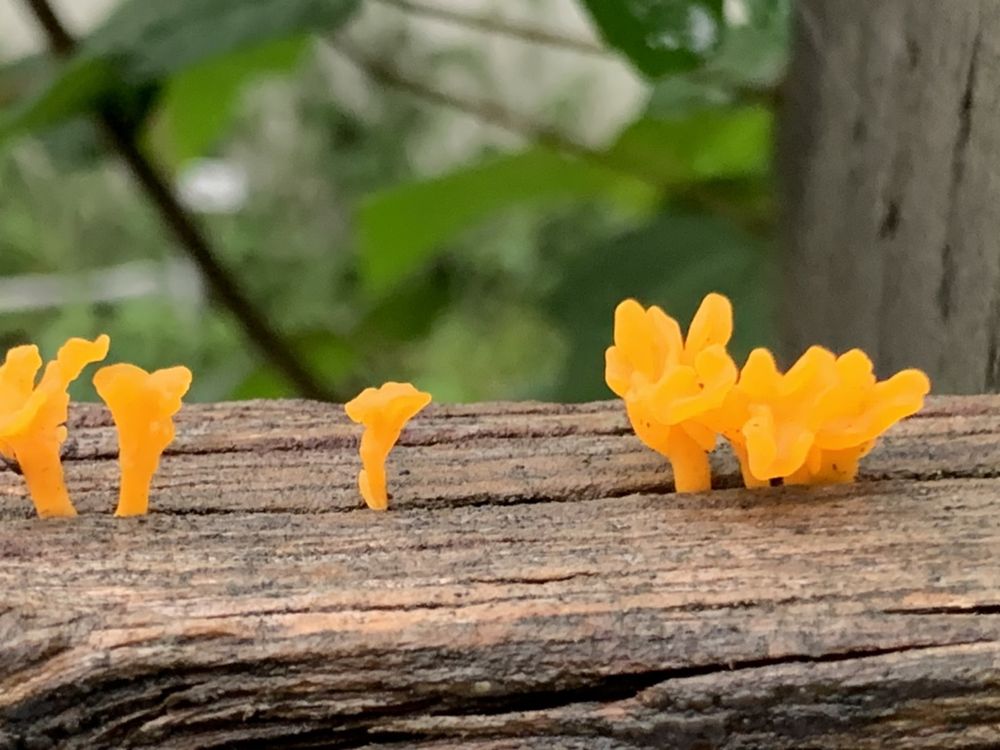
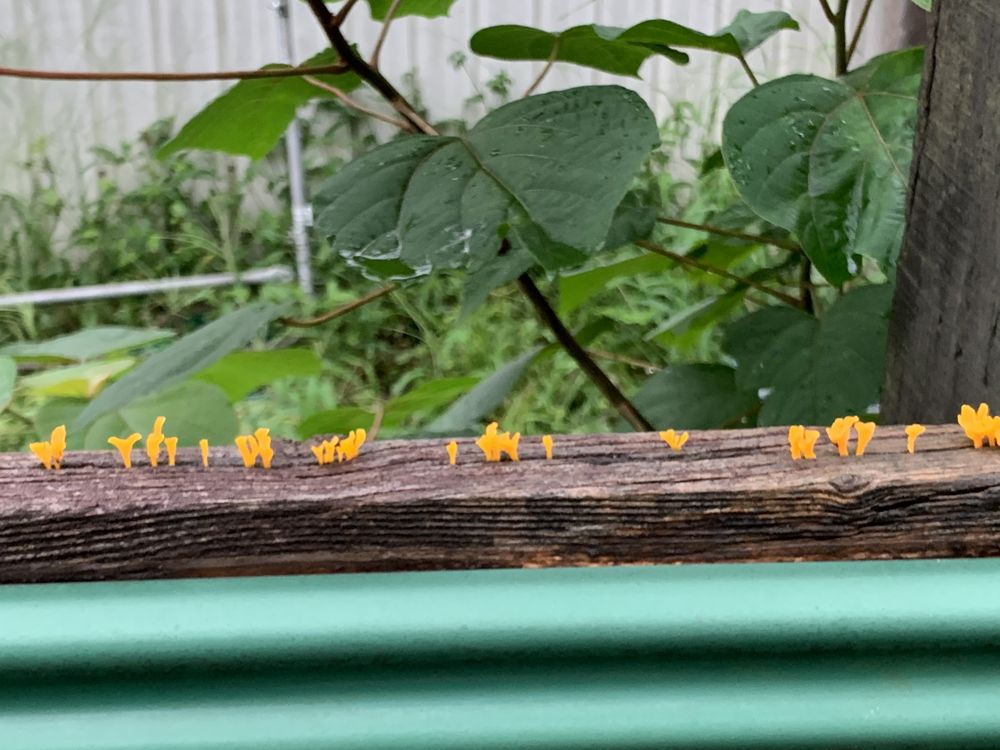
ツノマタタケ類(橙色のゼラチン質菌)📷 2枚2 photos
ツノマタタケ類(橙色のゼラチン質菌)ツノマタタケ類(橙色のゼラチン質菌)
★★★☆☆

ツノマタタケ類(橙色のゼラチン質菌)Antler jelly fungi (Calocera / Dacrymyces)

Calocera / Dacrymyces sp.
不食Inedible確度 中Confidence: Moderate

同じ場所の朽木・加工木材上に発生した橙色・ゼラチン質の小型菌。先が二叉する鹿角・音叉状のもの(材の割れ目に列生)と、へら〜珊瑚状に枝分かれするものが見られる。橙色・ゼラチン質・材上生・二叉分枝からアカキクラゲ科(ツノマタタケ類)と判断。微小で食用にはしない。Orange, gelatinous small fungi on dead and worked wood at the same spot. Some are antler- to tuning-fork-shaped with forked tips (in rows along cracks in the timber); others are spatula-shaped or branch like coral. Orange colour, gelatinous flesh, growth on wood and forking all point to the Dacrymycetaceae (stagshorn / antler jellies). Too tiny to eat.

🔍 確認ポイント: 子実体が二叉に分かれるか/ゼラチン質か/珊瑚状に枝分かれするか/発生材(広葉樹か針葉樹か)。種の確定には担子器が音叉状に二叉するかを顕微鏡で確認。To confirm: Whether the tips fork / whether the flesh is gelatinous / whether it branches like coral / substrate (hardwood or conifer). Species needs the tuning-fork basidia checked under a microscope.

📅 2026-07-25 📍 不明(EXIF位置情報なし)Unknown (no EXIF location)
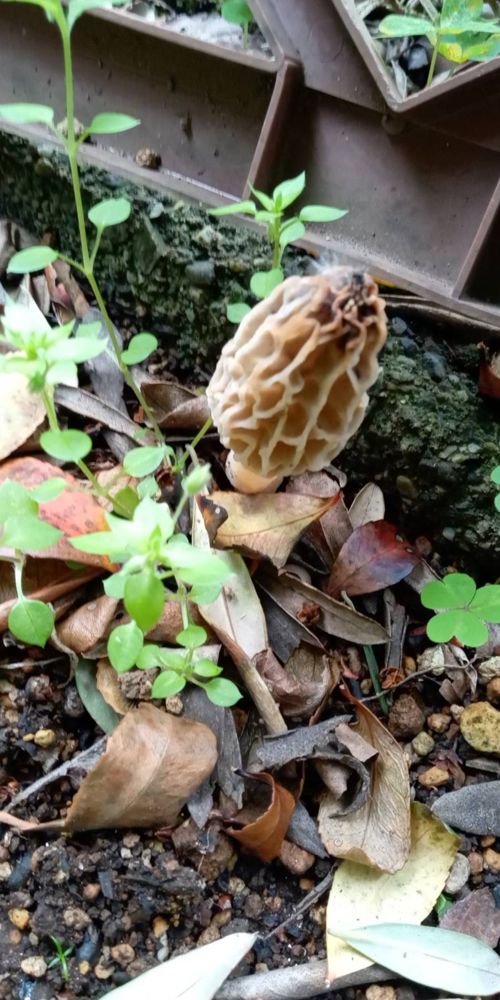
アミガサタケ(アミガサタケ属)
★★★★☆

アミガサタケ(アミガサタケ属)Morel (Morchella)

Morchella sp.
食用Edible確度 中〜高Confidence: Moderate–High

庭の植え込み(プラスチック製の縁材の脇)の土上に単生。傘は円錐形で、隆起した稜と深く窪んだ小孔からなる顕著な蜂の巣状(網目)。淡黄褐色〜クリーム色。ヒダを持たず子嚢菌類特有の網目構造をもつことからアミガサタケ属(Morchella)と判断。柄は白っぽく中空とみられる。春〜初夏に都市の庭・植え込み・ウッドチップ上に発生するアミガサタケ類の特徴と一致。A single fruitbody on soil beside the plastic edging of a garden bed. The conical cap is a distinct honeycomb of raised ridges and deep pits, pale tan to cream. It bears no gills; the netted, pitted surface is the ascomycete character that places it in Morchella (true morels). The stem looks whitish and hollow. Fits the morels that appear on garden soil, plantings and wood chips in spring to early summer in the city.

🔍 確認ポイント: 傘と柄の内部が一続きの中空か(真正アミガサタケの決め手)。傘が脳状のシワではなく網目状の窪みであること=有毒のシャグマアミガサタケ属(Gyromitra)との区別。傘と柄の接合様式(下端まで合着=トガリアミガサタケ型か、スカート状に離れるか)で種を絞る。発生基質と発生時期。To confirm: Whether cap and stem form one continuous hollow (the mark of a true morel). That the cap is netted-and-pitted, not brain-like and wrinkled — this separates it from the toxic false morels (Gyromitra). How the cap joins the stem (fully attached, as in the pointed morels, or hanging skirt-like) helps narrow the species. Substrate and season.
📅 2026-07-25 📍 不明(EXIF位置情報なし)Unknown (no EXIF location)
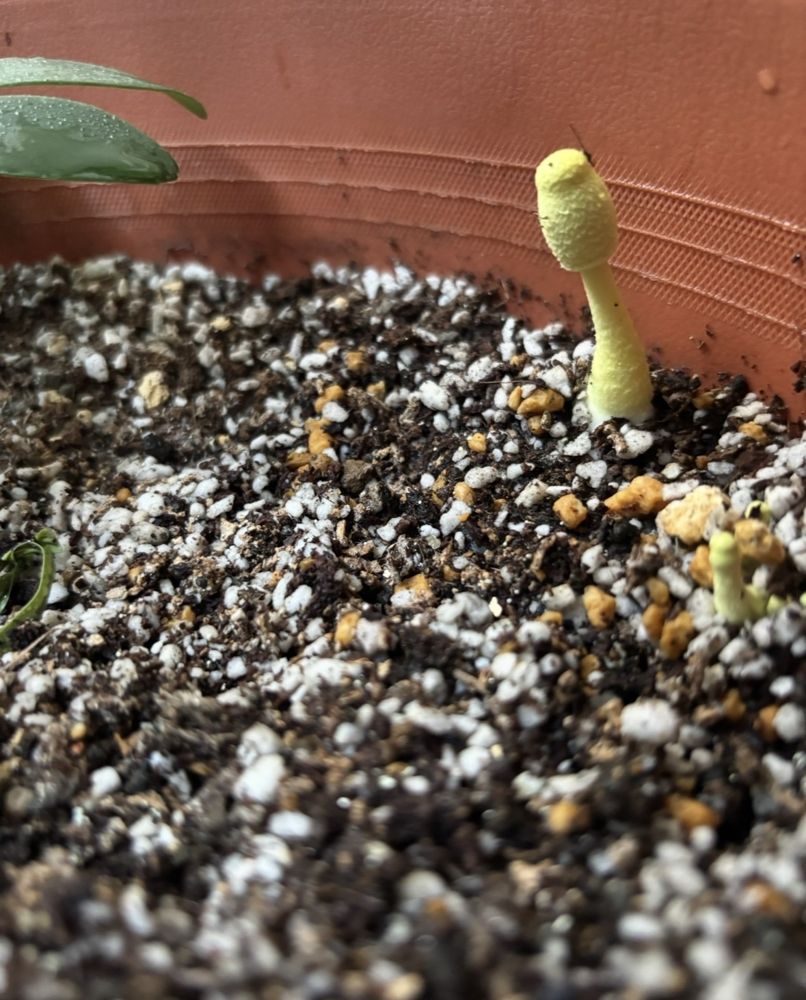
コガネキヌカラカサタケ
★★☆☆☆

コガネキヌカラカサタケFlowerpot parasol (plantpot dapperling)

Leucocoprinus birnbaumii
毒Toxic確度 高Confidence: High

鮮やかなレモンイエローの小型菌。円筒〜卵形の傘全面が粉状の鱗片に覆われ、細い黄色の柄に乗る。観葉植物の鉢の培養土(パーライト混)から発生し、隣に幼菌が1本。鉢植えに出る代表種。Small mushroom of a vivid lemon yellow. The cylindrical to egg-shaped cap is covered all over in powdery scales and sits on a slender yellow stem. It came up from the potting mix (with perlite) of a houseplant, with a single young fruitbody beside it. The classic flowerpot species.

🔍 確認ポイント: 成長後に傘が開いて放射状の条線とツバが現れるか、胞子紋が白色か。全体が黄色いまま退色しないこと。To confirm: Whether the cap opens with age to show radial striations and a ring, and whether the spore print is white. The whole fungus should stay yellow without fading.

📅 2026-07-17 📍 不明(鉢植え・EXIF位置情報なし)Unknown (potted plant; no EXIF location)
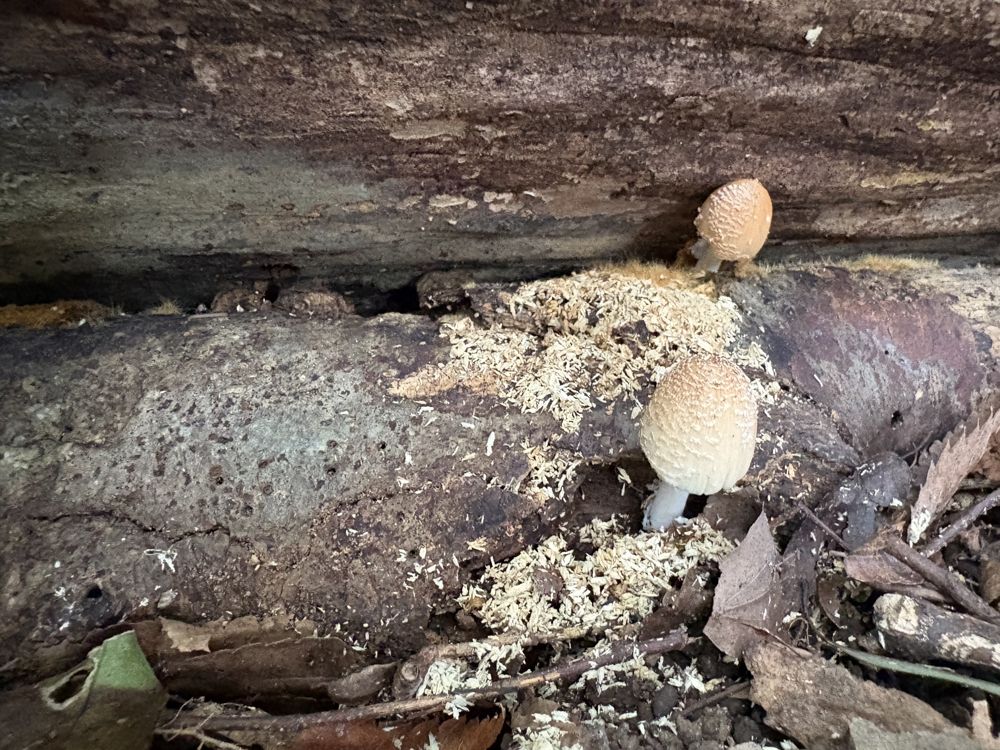
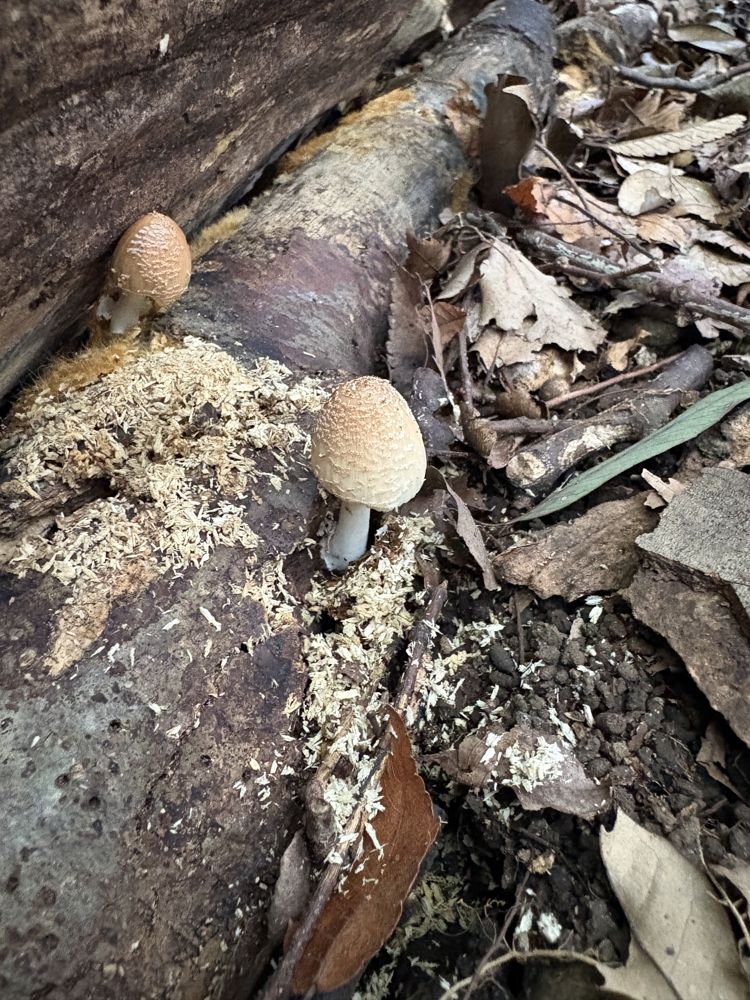
キララタケ属(コキララタケ類の可能性)📷 2枚2 photos
キララタケ属(コキララタケ類の可能性)キララタケ属(コキララタケ類の可能性)
★★☆☆☆

キララタケ属(コキララタケ類の可能性)Mica cap

Coprinellus cf. micaceus
食毒不明Edibility unknown確度 中Confidence: Moderate

朽木の上におがくず状の虫糞を伴って発生する卵形の小型菌。傘表面は微細な鱗片・雲母状の粒、柄は白い。材上生でインクキャップ類、老成すると溶ける。Egg-shaped small mushrooms on rotting wood, accompanied by sawdust-like insect frass. The cap bears fine scales and mica-like granules; the stem is white. A wood-inhabiting inky cap that dissolves as it matures.

🔍 確認ポイント: 傘の雲母状粒/成長後の黒変・液化/胞子紋(黒)To confirm: Mica-like granules on the cap / blackening and deliquescence with age / spore print (black)

📅 2026-07-08 📍 東京都渋谷区Shibuya, Tokyo
カワラタケ📷 2枚2 photos
カワラタケカワラタケ
★☆☆☆☆

カワラタケTurkey tail

Trametes versicolor
不食Inedible確度 高Confidence: High

切り株・倒木に多数重生する薄い半円形の硬いサルノコシカケ型。同心円状の環紋、傘裏は微細な管孔。白色腐朽菌でごく普通種。硬く食用にならない(薬用利用あり)。Thin, hard, semicircular brackets tiered in numbers on stumps and fallen logs. Concentric zones across the cap, fine pores beneath. A white-rot fungus and a thoroughly common species. Far too tough to eat, though it has a history of medicinal use.

🔍 確認ポイント: 傘裏が管孔か/環紋・ビロード状の毛To confirm: Whether the underside is pored / concentric zones and velvety hairs

📅 2026-07-08 📍 東京都渋谷区Shibuya, Tokyo
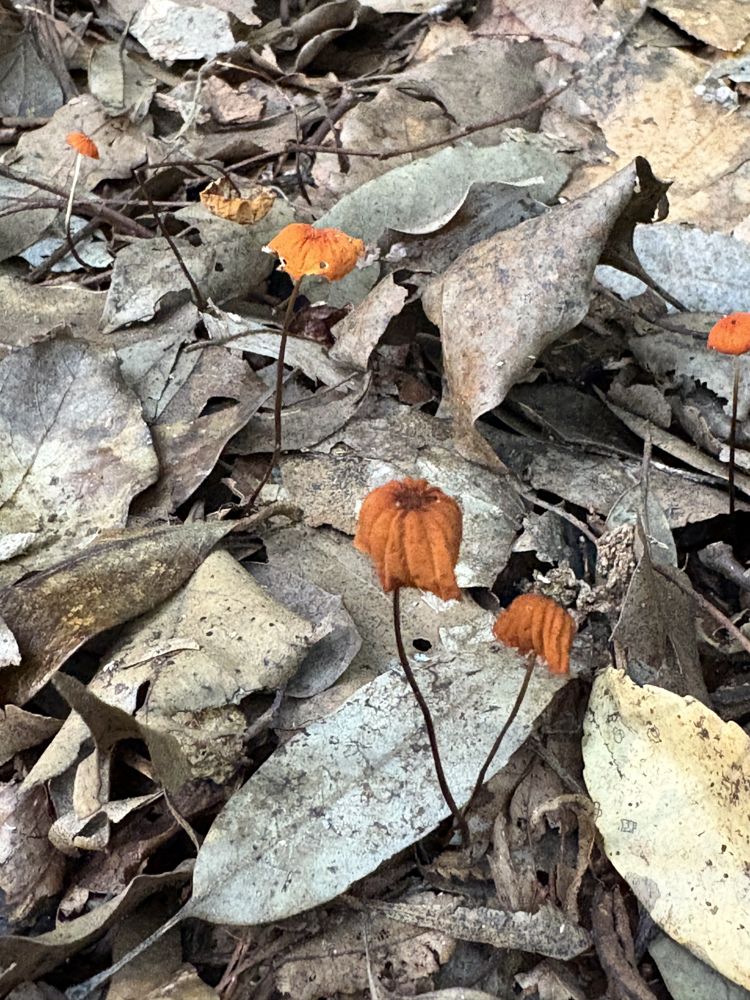
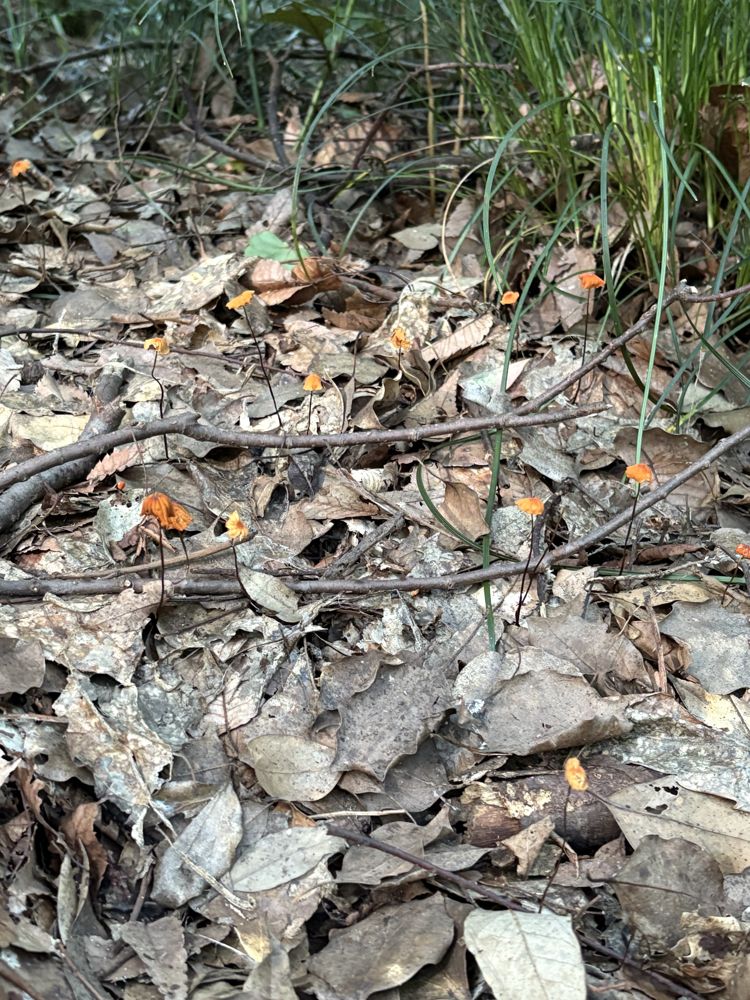
ホウライタケ属(オチバタケ類)📷 2枚2 photos
ホウライタケ属(オチバタケ類)ホウライタケ属(オチバタケ類)
★★★☆☆

ホウライタケ属(オチバタケ類)Parachute mushroom (Marasmius)

Marasmius sp.
食毒不明Edibility unknown確度 中Confidence: Moderate

落葉上に散生する橙色の微小菌。放射状に溝立つ鐘形〜パラソル形の傘、針金状の細く黒い柄。落葉分解性のホウライタケ属と推定。微小で食用価値なし。Tiny orange mushrooms scattered over fallen leaves. Bell- to parasol-shaped caps with radial grooves, carried on slender, wiry black stems. Presumed Marasmius, a leaf-litter decomposer. Too small to have any food value.

🔍 確認ポイント: 柄の質感(針金状)/傘の溝/発生基質(落葉)To confirm: Texture of the stem (wiry) / grooving of the cap / substrate (leaf litter)

📅 2026-07-08 📍 東京都渋谷区Shibuya, Tokyo
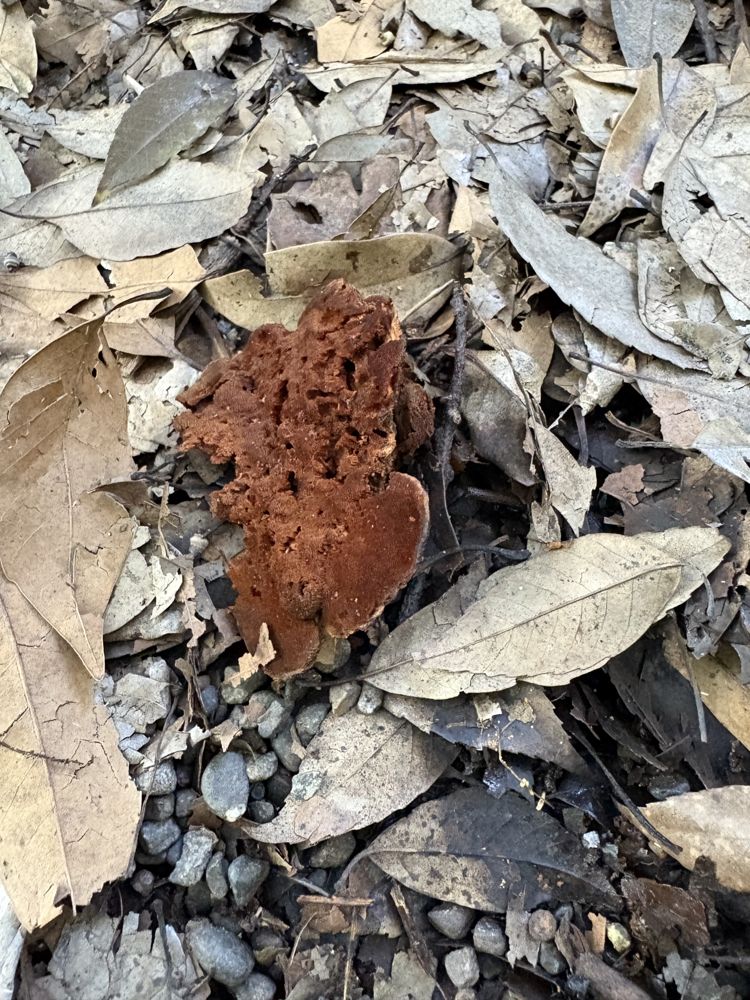
同定困難(崩れかけの菌塊)
★★☆☆☆

同定困難(崩れかけの菌塊)Unidentified

不明(indet.、イグチ類老菌の可能性)
食毒不明Edibility unknown確度 低Confidence: Low

落葉・砂礫上の赤褐色で海綿状(管孔状)の菌塊。老成・崩壊が進み形態が不明瞭。管孔が残ることからイグチ類の老菌の可能性があるが同定困難。Reddish-brown, sponge-like (pored) mass of fungus on leaf litter and gravel. Over-mature and collapsing, so the form is unclear. The surviving tubes suggest an old bolete, but identification is not possible.

🔍 確認ポイント: 新しい個体で傘・柄・孔口を再確認To confirm: Re-examine cap, stem and pores on a fresh specimen

📅 2026-07-08 📍 東京都渋谷区Shibuya, Tokyo
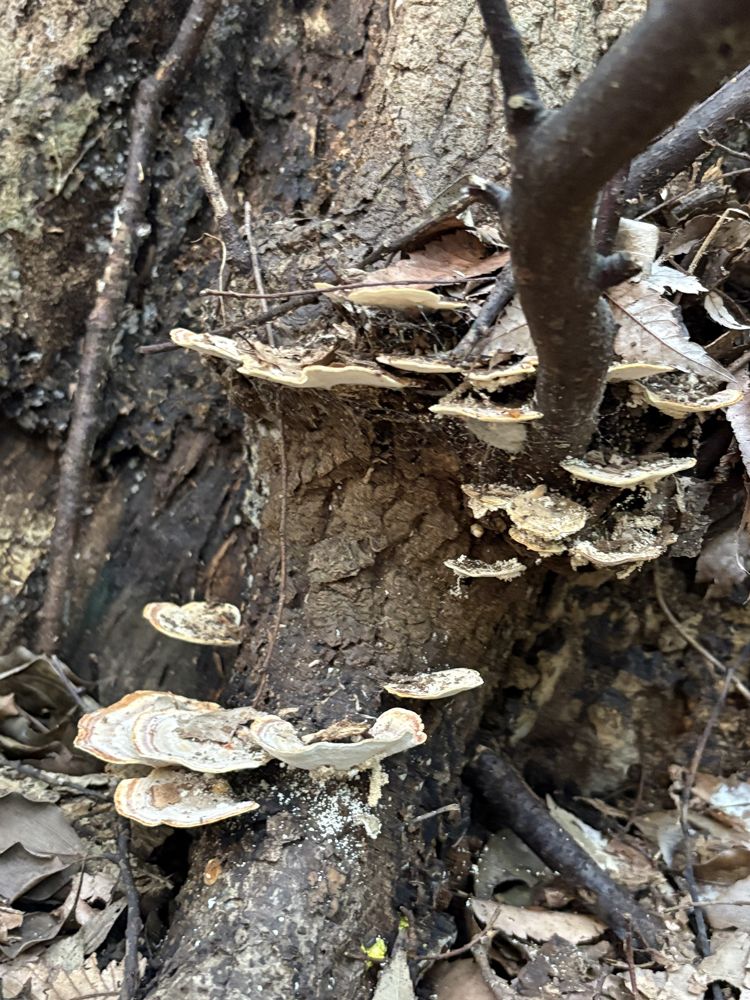
カワラタケ類(多孔菌)📷 2枚2 photos
カワラタケ類(多孔菌)カワラタケ類(多孔菌)
★★☆☆☆

カワラタケ類(多孔菌)Bracket fungus (Trametes / Polyporaceae)

Trametes / Polyporaceae sp.
不食Inedible確度 中Confidence: Moderate

倒木上に列生する半円形の多孔菌。白〜クリーム色の傘に橙褐色の環、傘裏は管孔。硬い革質の白色腐朽菌でカワラタケ類。食用にならない。Semicircular polypores in a row along a fallen log. White to cream caps banded with orange-brown, pored beneath. A tough, leathery white-rot fungus of the turkey tail group. Not edible.

🔍 確認ポイント: 傘裏の管孔の細かさ/環紋・毛の有無To confirm: Fineness of the pores beneath / presence of zoning and hairs

📅 2026-07-08 📍 東京都渋谷区Shibuya, Tokyo
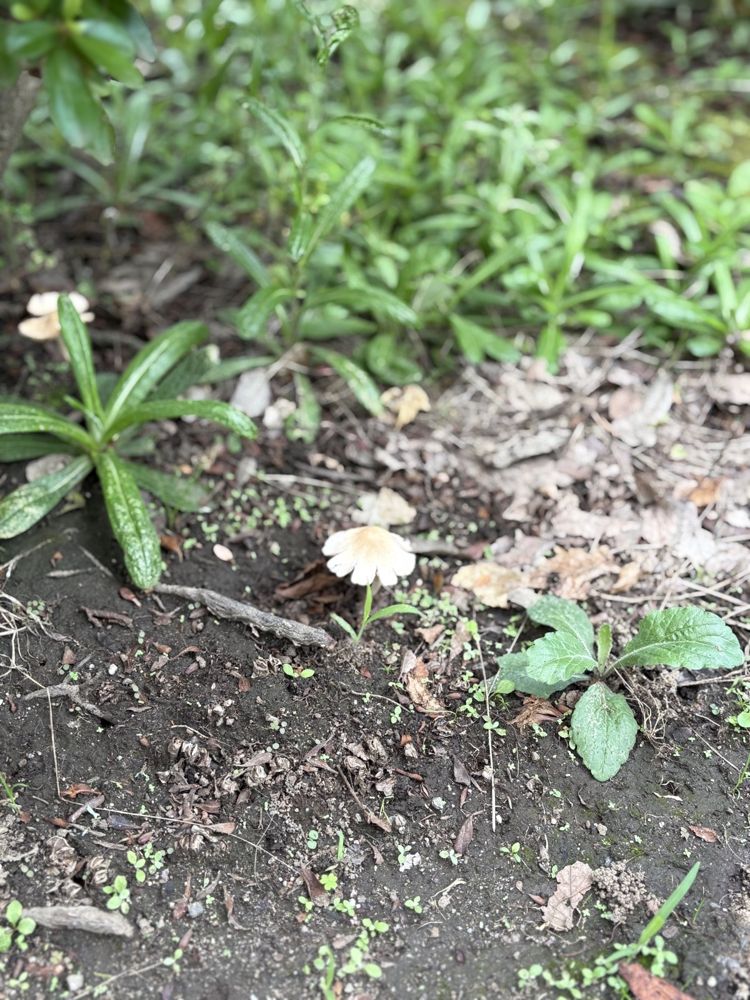
ヒメヒガサヒトヨタケ類📷 2枚2 photos
ヒメヒガサヒトヨタケ類ヒメヒガサヒトヨタケ類
★★☆☆☆

ヒメヒガサヒトヨタケ類Pleated inkcap

Parasola cf. plicatilis
不食Inedible確度 中〜高Confidence: Moderate–High

直径3cmほどの薄い膜質の傘が完全に平開。中央は灰褐色〜暗褐色でくぼみ、そこから縁まで放射状の深い溝(プリーツ)が走る。草地の地上に単生。ヒトヨタケ類だが本群は液化がごく弱い。Thin, membranous cap about 3 cm across, opened completely flat. The centre is greyish- to dark-brown and depressed, with deep radial pleats running from it to the margin. Single on grassy ground. An inky cap, though this group deliquesces only very weakly.
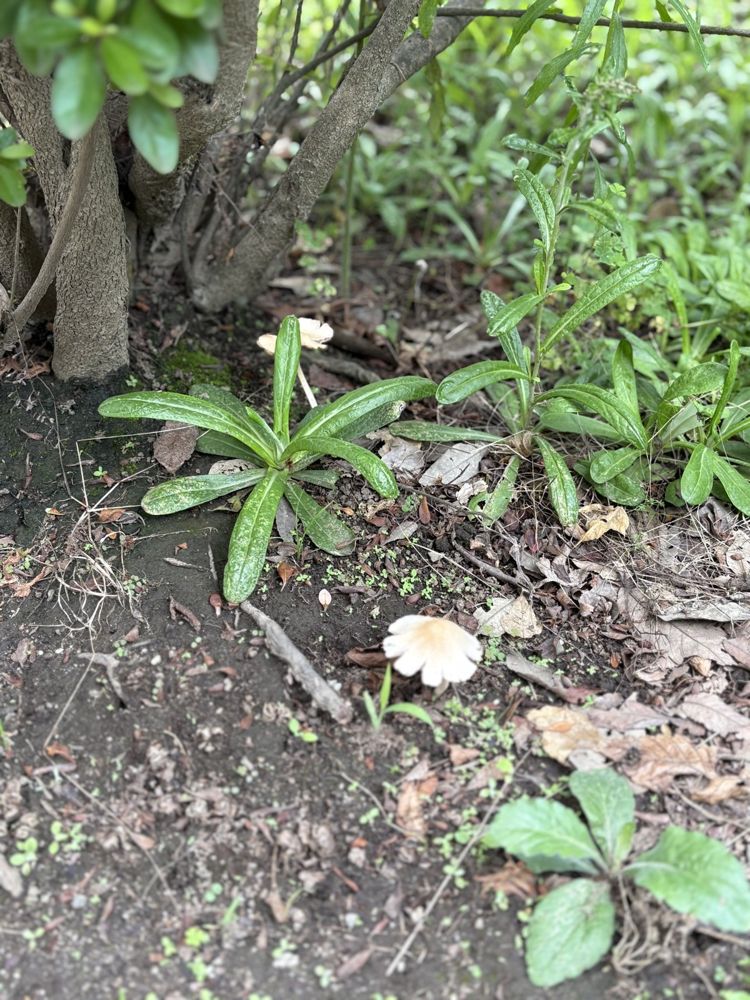
🔍 確認ポイント: ヒダの黒変・液化の有無、柄の中空・無毛かどうか、胞子紋の色(黒)。種の確定には顕微鏡での胞子形が必要。To confirm: Whether the gills blacken and dissolve; whether the stem is hollow and hairless; spore print colour (black). Confirming the species requires spore shape under a microscope.

📅 2026-07-07 📍 東京都世田谷区Setagaya, Tokyo
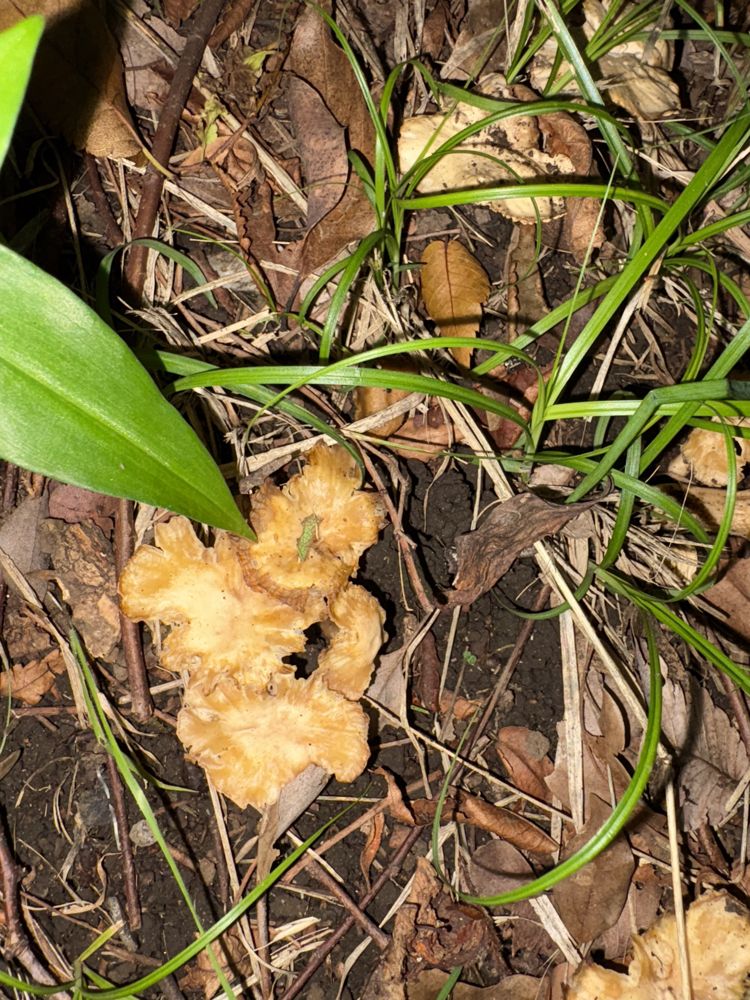
アンズタケ属の一種
★★★☆☆

アンズタケ属の一種Chanterelle

Cantharellus sp.
食毒不明Edibility unknown確度 中Confidence: Moderate

淡い杏色〜淡黄色で、縁が大きく波打ち裂けた漏斗〜へら形の子実体が落葉上に散生。傘裏は薄いヒダ状のひだ脈(偽ヒダ)に見えるが、暗所撮影のため断定できず。周囲に同色の個体が複数。Pale apricot to pale yellow fruitbodies, funnel- to spatula-shaped with strongly wavy, split margins, scattered over fallen leaves. The underside appears to bear low, vein-like folds (false gills) rather than true gills, but the shot was taken in poor light and this cannot be settled. Several fruitbodies of the same colour nearby.

🔍 確認ポイント: 傘裏が「刃のあるヒダ」か「低い脈状のひだ(偽ヒダ)」か。偽ヒダで柄に垂生し、杏の香りがあればアンズタケ属。ヒダが薄板状で明瞭ならヒラタケ類・カヤタケ類など別属。肉の色と傷変色も確認。To confirm: Whether the underside has true, blade-like gills or low vein-like folds (false gills). False gills running down the stem plus an apricot smell would indicate Cantharellus; thin, clearly plate-like gills would point to Pleurotus, Clitocybe or another genus. Check flesh colour and any bruising reaction.

📅 2026-07-07 📍 東京都世田谷区Setagaya, Tokyo
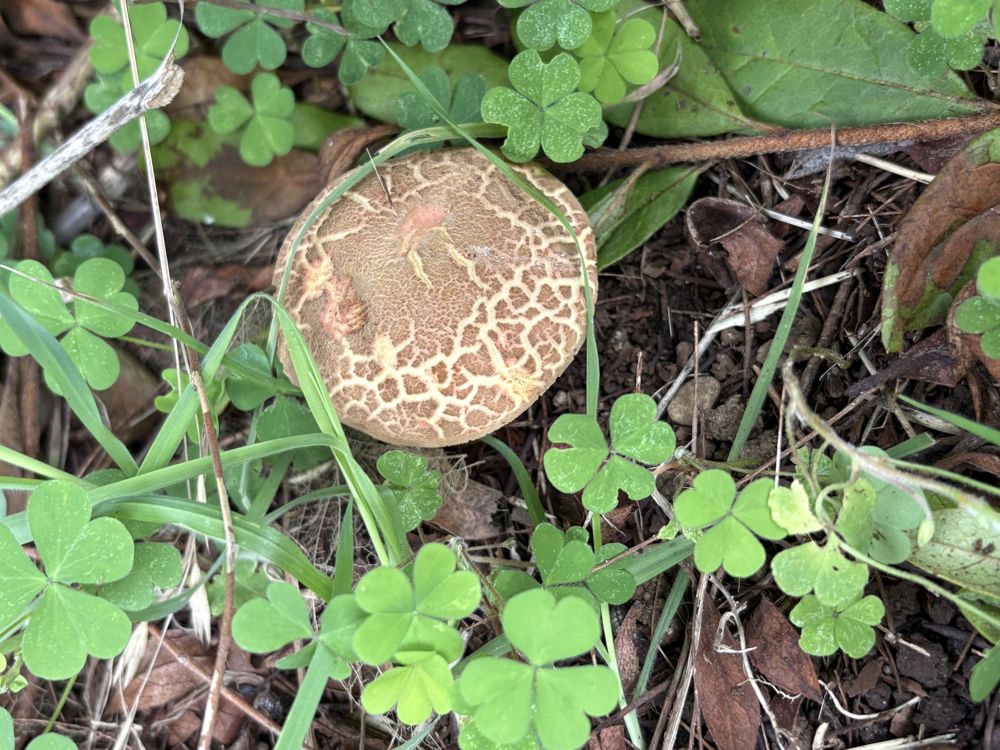
アワタケ類(ひび割れ傘のイグチ)
★★★☆☆

アワタケ類(ひび割れ傘のイグチ)Red cracking bolete

Xerocomellus cf. chrysenteron
食毒不明Edibility unknown確度 中Confidence: Moderate

傘表面が細かく亀甲状にひび割れ、割れ目に赤みが覗くイグチ型。カタバミの生える地上。アワタケ類は軟質・青変性で食用価値が低く、近縁種の判別も要するため食毒不明。Bolete whose cap surface is finely cracked into a tortoiseshell pattern, with red showing through the fissures, on ground where wood sorrel grows. Xerocomellus species are soft-fleshed, blue-bruising and of poor food value, and telling the close relatives apart takes care — edibility left unresolved.

🔍 確認ポイント: 傘裏の管孔の色/傷の青変の有無/柄の様子To confirm: Colour of the pores beneath the cap / whether bruises turn blue / appearance of the stem

📅 2026-07-05 📍 東京都世田谷区Setagaya, Tokyo
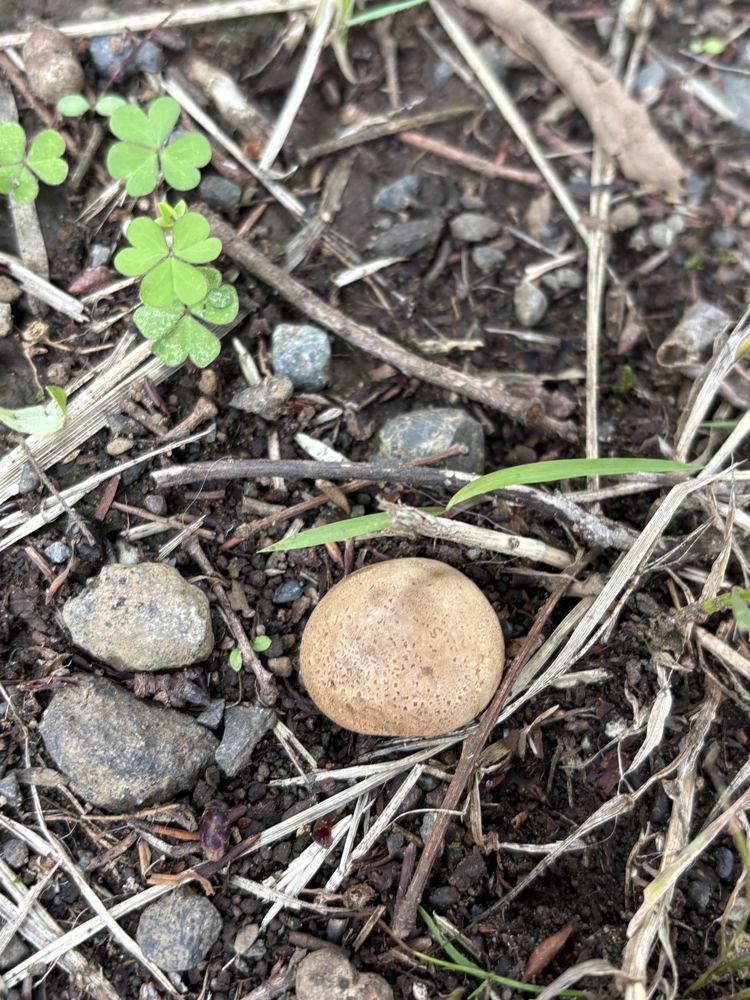
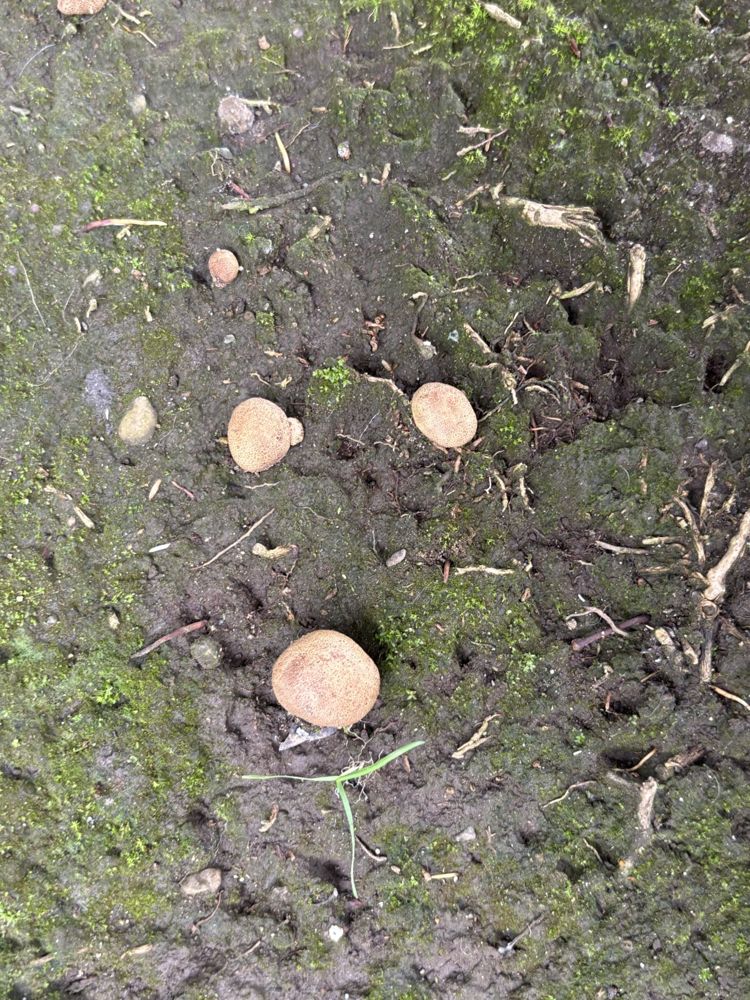
球形の幼菌(ホコリタケ類/ニセショウロ属の可能性)
★★★☆☆

球形の幼菌(ホコリタケ類/ニセショウロ属の可能性)Young puffball or earthball

Lycoperdon / Scleroderma sp.
食毒不明Edibility unknown確度 低Confidence: Low

砂礫混じりの地上に単生する淡褐色の球形菌。表面は微細な斑点状でほぼ平滑。幼菌で属判別が難しく、毒のニセショウロ属と紛らわしい。Pale brown spherical fungus growing singly on gravelly ground, the surface nearly smooth with fine speckles. The genus is hard to fix in so young a specimen, and it is easily confused with the toxic Scleroderma.

🔍 確認ポイント: 縦に割り中身が白く均一か(黒紫・硬い皮はニセショウロ属=毒)To confirm: Cut lengthwise — is the interior uniformly white? (dark purple flesh with a hard rind means Scleroderma, which is toxic)

📅 2026-07-05 📍 東京都世田谷区Setagaya, Tokyo
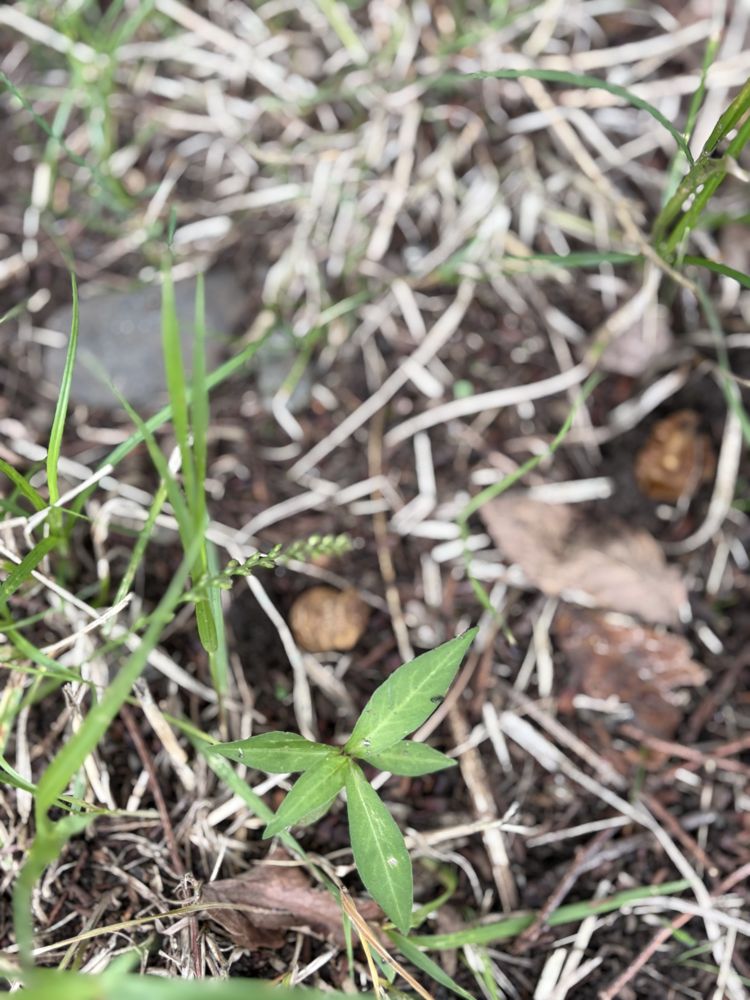
同定困難(ピンボケの小型菌)
★★☆☆☆

同定困難(ピンボケの小型菌)Unidentified

不明(indet.)
食毒不明Edibility unknown確度 低Confidence: Low

主対象が草本でピンボケ。背景に橙褐色の小型菌が複数写るが、同定に足る特徴が得られず。再撮影を推奨。The main subject is a herbaceous plant and the shot is out of focus. Several small orange-brown mushrooms appear in the background, but with too little detail to identify. Worth re-photographing.

🔍 確認ポイント: 現物を近接・傘裏まで再撮影To confirm: Re-photograph the specimen close up, including the cap underside

📅 2026-07-05 📍 東京都世田谷区Setagaya, Tokyo
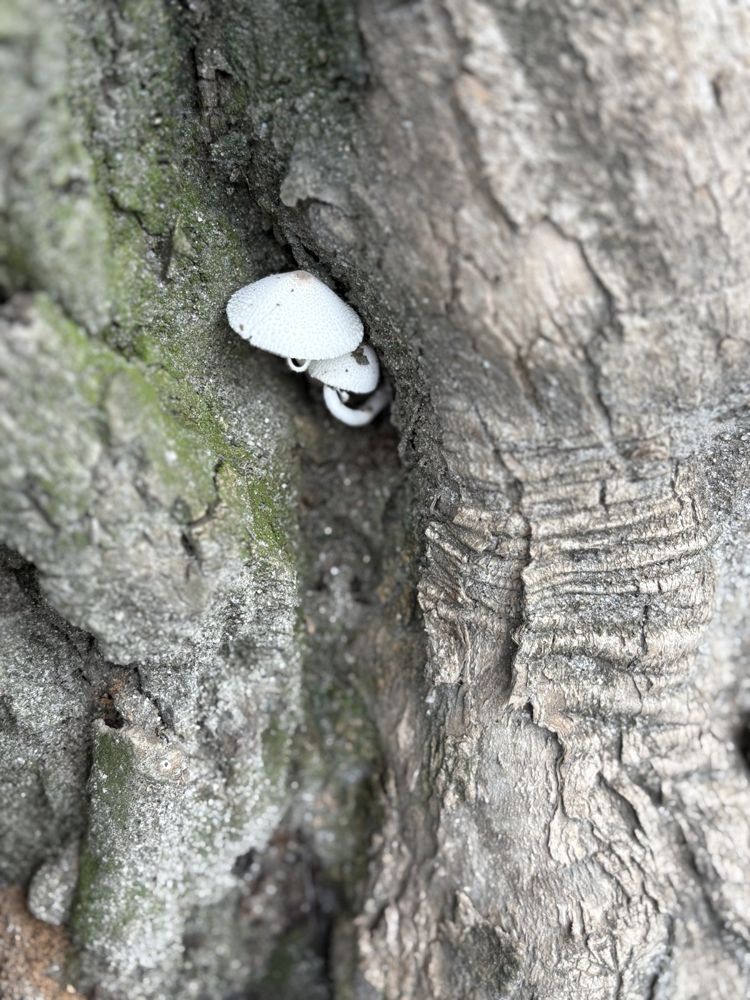
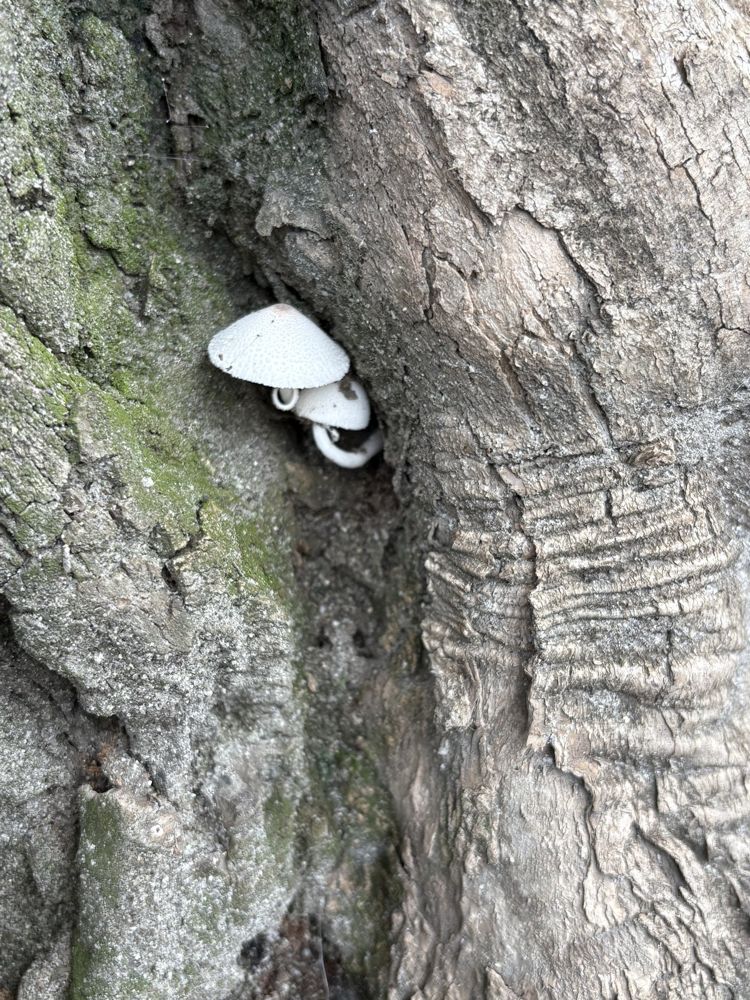
キララタケ類📷 2枚2 photos
キララタケ類キララタケ類
★★★☆☆

キララタケ類Mica cap

Coprinellus sp.
食毒不明Edibility unknown確度 中Confidence: Moderate

樹皮の裂け目に発生する微小な白色菌。傘表面に白い雲母状の粒。接写(IMG_7783)で傘縁が黒く液化しており、ヒトヨタケ型(インクキャップ)と確認。キララタケ属と推定。Minute white fungus emerging from a split in bark, the cap dusted with mica-like granules. The close-up (IMG_7783) shows the cap margin blackening and liquefying, confirming an inky cap. Presumed Coprinellus.

🔍 確認ポイント: 生育基質(材上か)/黒変・液化の有無To confirm: Substrate (whether on wood) / presence of blackening and deliquescence

📅 2026-07-04 📍 東京都世田谷区Setagaya, Tokyo
ヒメヒガサヒトヨタケ類📷 2枚2 photos
ヒメヒガサヒトヨタケ類ヒメヒガサヒトヨタケ類
★★☆☆☆

ヒメヒガサヒトヨタケ類Pleated inkcap

Parasola cf. plicatilis
食毒不明Edibility unknown確度 中Confidence: Moderate

傘が放射状に強く溝立つ小型菌。細い柄で裸地に単生。パラソル状に開き溶けにくいヒトヨタケ科(旧ヒメコガサ判定から修正)。微小で食用価値なし。Small mushroom whose cap is deeply pleated in a radial fan, on a slender stem, single on bare ground. It opens like a parasol and resists dissolving — a member of the Psathyrellaceae (revised from an earlier Conocybe determination). Too small to have any food value.

🔍 確認ポイント: 傘の溝の深さ/ヒダの付き方To confirm: Depth of the cap pleats / how the gills are attached

📅 2026-07-04 📍 東京都世田谷区Setagaya, Tokyo
チャヒラタケ類(ハタケキノコ属の可能性も)
★★☆☆☆

チャヒラタケ類(ハタケキノコ属の可能性も)Scurfy twiglet

Tubaria cf. furfuracea
食毒不明Edibility unknown確度 低Confidence: Low

木くず混じりの湿った裸地に群生する褐色の小型菌。傘に繊維状の鱗片。木質基質を好むチャヒラタケ属か、芝地のハタケキノコ属か。胞子紋・ヒダ色で判別要。Brown small mushrooms clustered on damp bare ground mixed with wood chips, the caps bearing fibrous scales. Either Tubaria, which favours woody substrate, or Agrocybe of grassy places. A spore print and the gill colour are needed to separate them.

🔍 確認ポイント: 生育基質(木くずか土か)/胞子紋の色To confirm: Substrate (wood chips or bare soil) / colour of the spore print

📅 2026-07-04 📍 東京都世田谷区Setagaya, Tokyo
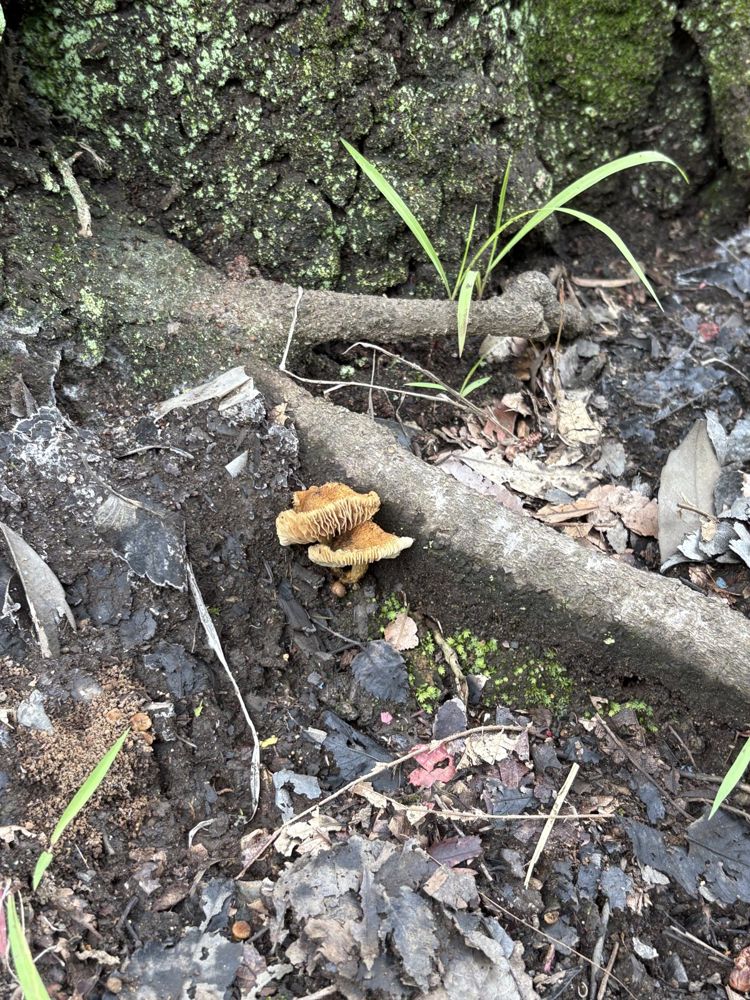
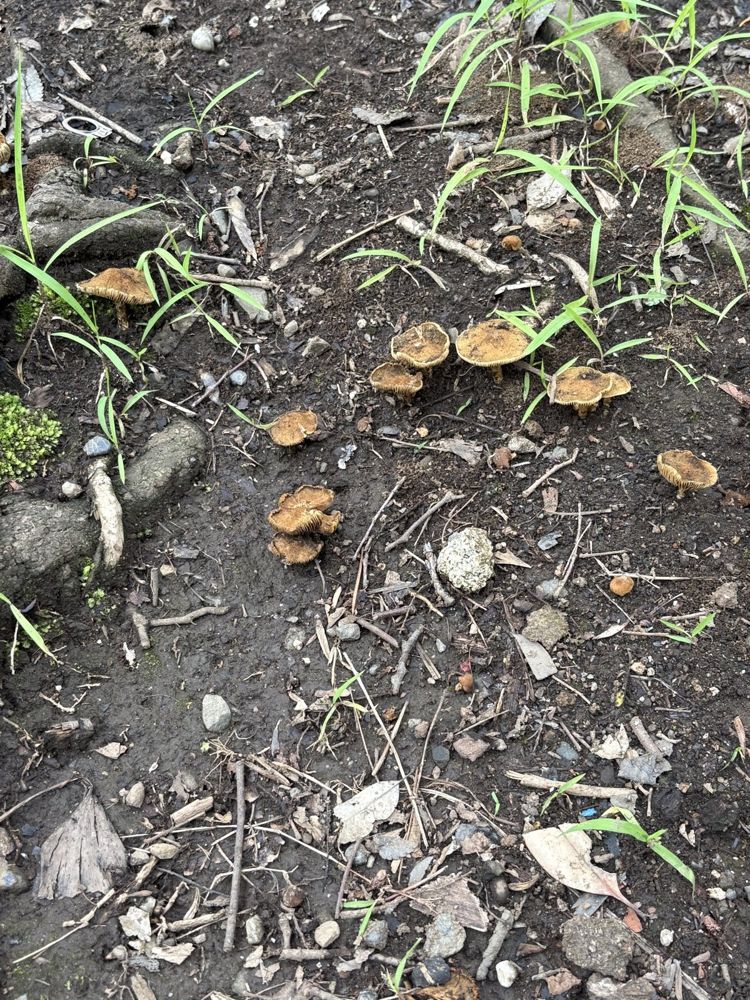
スギタケ属/チャツムタケ属
★★★☆☆

スギタケ属/チャツムタケ属Scalycap / rustgill (Pholiota / Gymnopilus)

Pholiota / Gymnopilus sp.
食毒不明Edibility unknown確度 低Confidence: Low

木の根上に束生する橙褐色の鱗片状菌。ヒダは淡黄色。木材腐朽性。チャツムタケ属(苦味・食不適)と近縁で紛らわしく、食用不可。Orange-brown scaly mushrooms in dense tufts on a tree root, with pale yellow gills. Wood-decaying. Close to Gymnopilus — bitter and unsuitable for food — and easily confused with it, so not for the table.

🔍 確認ポイント: 味(苦味の有無)/胞子紋の色(錆色ならチャツムタケ属)To confirm: Taste (bitter or not) / spore print colour (rusty indicates Gymnopilus)

📅 2026-07-04 📍 東京都世田谷区Setagaya, Tokyo
ホコリタケ類(※ニセショウロ属=毒に注意)
★★★☆☆

ホコリタケ類(※ニセショウロ属=毒に注意)Puffball

Lycoperdon sp.
食用Edible確度 中Confidence: Moderate

苔地に半ば埋もれる球形菌。表面は微粒状。食用になるのは割って中身が白く均一な幼菌のみ。皮が硬く中が黒紫のニセショウロ属(毒)と紛らわしいので必ず縦割り確認を。Spherical fungus half-buried in moss, the surface finely granular. Only young specimens with uniformly white flesh are edible. Easily confused with Scleroderma (toxic), which has a hard rind and dark purple interior, so always cut one lengthwise before deciding.

🔍 確認ポイント: 縦に割り、中身が白く均一か(黒紫・硬い皮は毒)To confirm: Cut lengthwise — is the interior uniformly white? (dark purple flesh with a hard rind is toxic)

📅 2026-07-04 📍 東京都世田谷区Setagaya, Tokyo
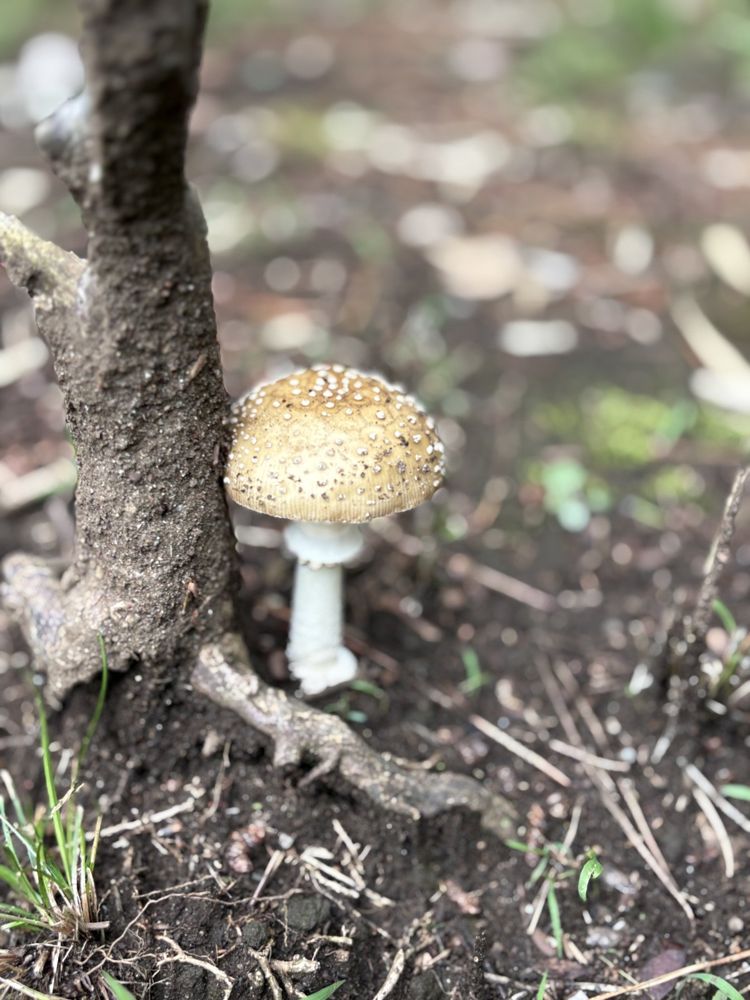
テングタケ
★★★★☆

テングタケPanther cap

Amanita cf. pantherina
毒Toxic確度 中〜高Confidence: Moderate–High

黄褐色の傘に白い破片状のイボ、傘縁に条線、柄にツバ、基部は球状に膨らむ。テングタケ属の特徴が明瞭。イボテン酸・ムッシモールを含む毒。Yellow-brown cap studded with white fragmentary warts, a striate margin, a ring on the stem, and a bulbous base. The Amanita characters are unmistakable. Toxic, containing ibotenic acid and muscimol.

🔍 確認ポイント: 基部のツボ・襟状の縁/条線の有無To confirm: Volva and collar-like rim at the base / presence of marginal striations

📅 2026-07-04 📍 東京都世田谷区Setagaya, Tokyo
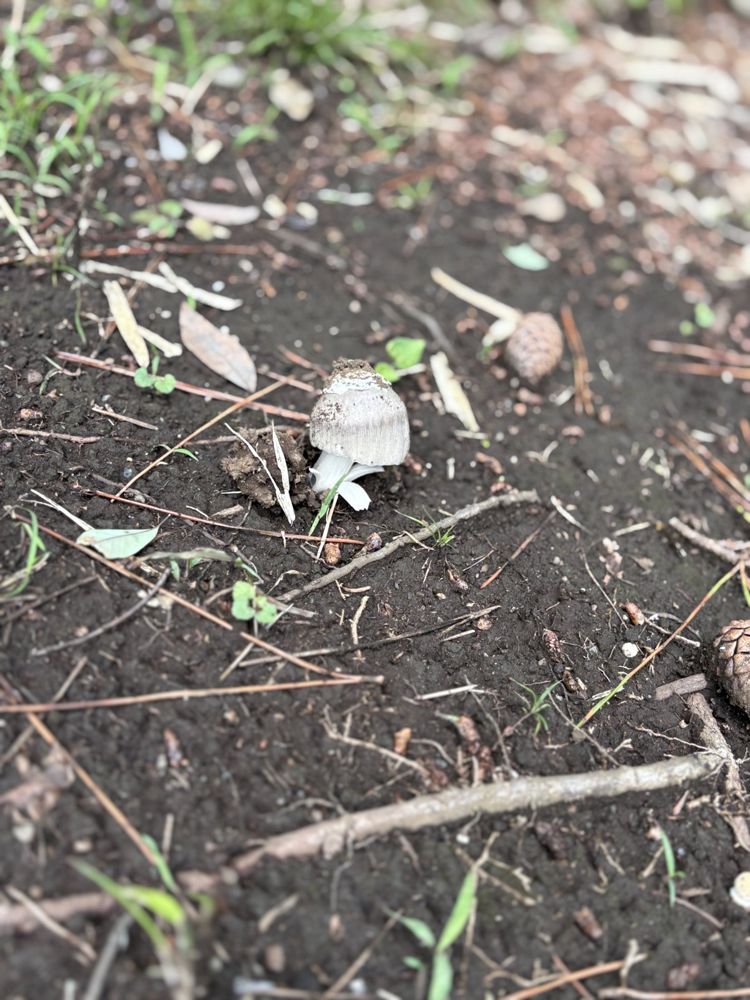
ヒトヨタケ類の幼菌
★★★☆☆

ヒトヨタケ類の幼菌Young inkcap

Coprinopsis / Coprinellus sp.
毒Toxic確度 中Confidence: Moderate

灰白色の鐘形で溝立つ傘、中央に褐色の鱗屑。裸地に単生するインクキャップの幼菌。近縁にアルコールと併せると中毒する種(コプリン)あり。Greyish-white bell-shaped cap with fine grooves and brown scurf at the centre, single on bare ground — a young inky cap. Some close relatives cause poisoning when eaten with alcohol (coprine).

🔍 確認ポイント: 成長後に傘が黒く溶けるか/胞子紋(黒色)To confirm: Whether the cap blackens and dissolves with age / spore print (black)

📅 2026-07-04 📍 東京都世田谷区Setagaya, Tokyo
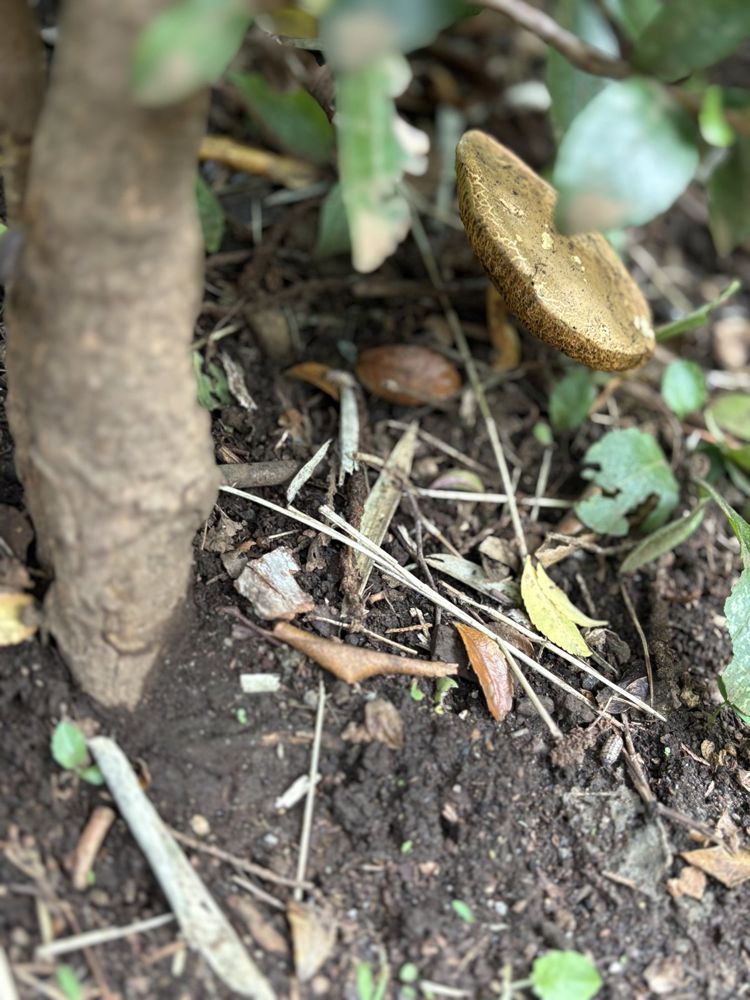
アワタケ類
★★★☆☆

アワタケ類Bolete

Xerocomus / Xerocomellus sp.
食毒不明Edibility unknown確度 中Confidence: Moderate

傘裏が管孔(スポンジ状)のイグチ型と確認。オリーブ褐色のビロード状の傘、黄色い孔口。低木の根元に出る菌根性。傷むと青変する種が多い。Confirmed a bolete: the underside is a sponge-like layer of tubes. Olive-brown velvety cap with yellow pores, appearing at the foot of a shrub — mycorrhizal. Many species in this group bruise blue.

🔍 確認ポイント: 孔口の青変の有無/柄の網目の有無To confirm: Whether the pores bruise blue / presence of netting on the stem

📅 2026-07-04 📍 東京都世田谷区Setagaya, Tokyo
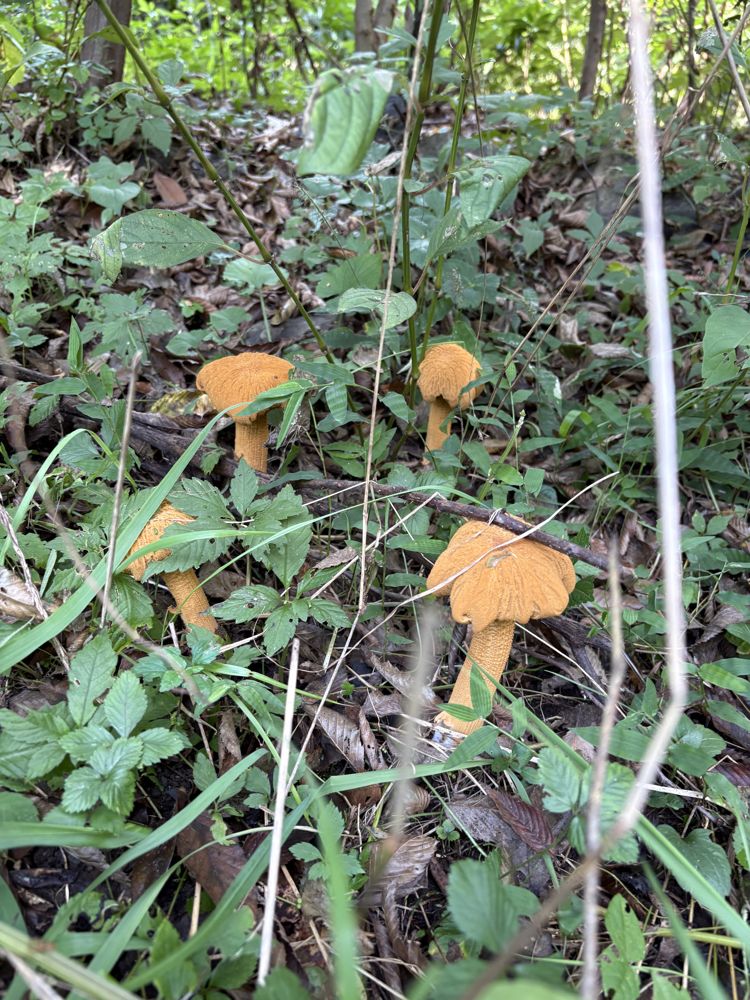
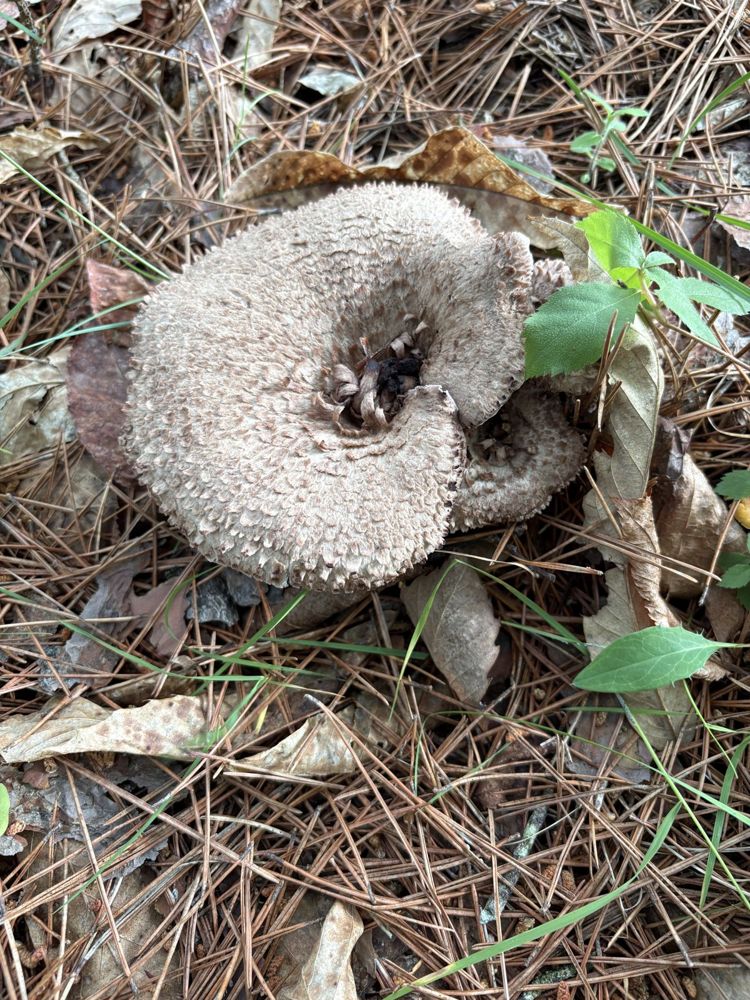
カラカサタケ類(コウタケ属の可能性も)
★★★☆☆

カラカサタケ類(コウタケ属の可能性も)Parasol mushroom (Macrolepiota / Chlorophyllum)

Macrolepiota/Chlorophyllum sp. (cf. Sarcodon)
食毒不明Edibility unknown確度 低Confidence: Low

淡色地に褐色の粗い鱗片が同心円状に密生する大型菌。松葉の上。傘裏がヒダならカラカサタケ類、針状ならコウタケ属で属が分かれる。ドクカラカサタケ類(毒)と紛らわしく食用不可。Large mushroom with coarse brown scales set in concentric rings on a pale ground, growing on pine needles. If the underside bears gills it belongs to the parasol group (Macrolepiota / Chlorophyllum); if spines, to Sarcodon — the genus turns on this one character. Easily confused with the toxic Chlorophyllum species, so not for the table.

🔍 確認ポイント: 傘の裏がヒダか針か/柄のツバ・基部の形To confirm: Gills or spines on the cap underside / shape of the stem ring and base

📅 2026-06-23 📍 長野県Nagano Pref.
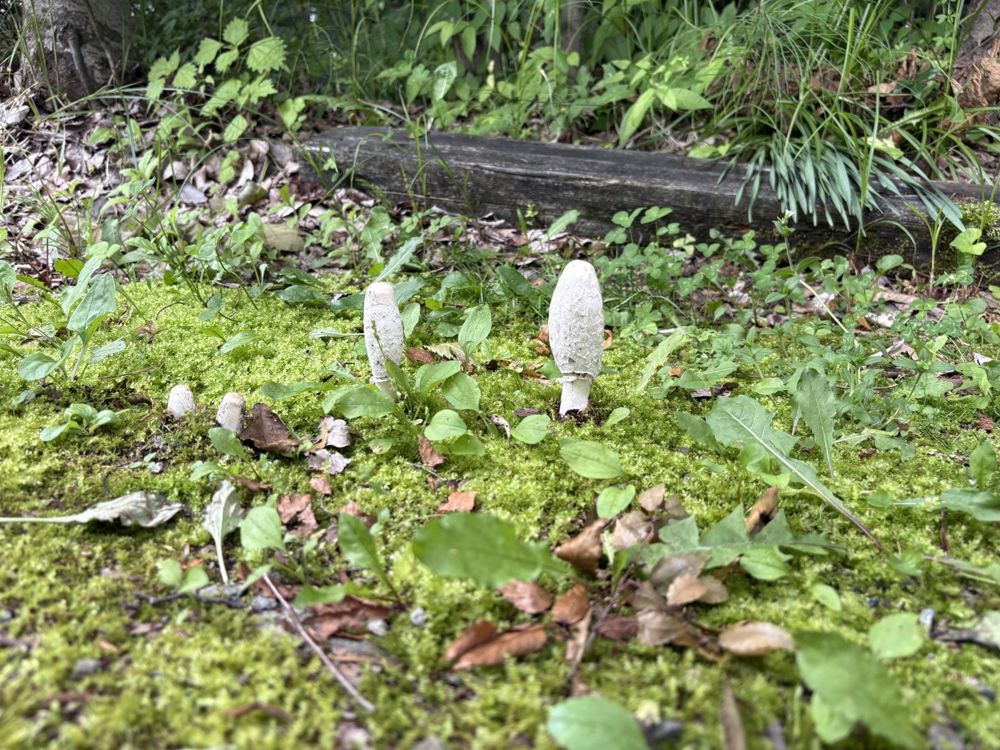
ササクレヒトヨタケ
★★★☆☆

ササクレヒトヨタケShaggy mane

Coprinus comatus
食用Edible確度 高Confidence: High

白い円筒形の傘に反り返るささくれ状の鱗片。苔地に群生。老成すると縁から黒く溶けるヒトヨタケ型。若く白い個体のみ食用(黒変後は不可)。傘の形・鱗片・生え方が一致し確度は高い。White cylindrical cap with coarse, upturned shaggy scales, growing in troops on mossy ground. With age the margin blackens and dissolves into ink — the classic inky-cap pattern. Edible only while young and white, never after blackening. Cap shape, scales and habit all agree, so confidence is high.

📅 2026-06-22 📍 長野県Nagano Pref.
⚠️ 掲載の同定はすべて写真からのAI推定です。実際の採取・摂食の際は必ず専門家や図鑑で現物を確認してください。毒キノコとの誤食は命に関わります。All identifications here are AI estimates made from photographs. Before collecting or eating anything, always have the actual specimen checked against a proper field guide or by an expert. Mistaking a toxic mushroom for an edible one can be fatal.